Happy Pi Day!
I remember back in school learning the value of pi out to as many digits as I could manage. I would like to say that I memorized it all the way to 20 digits past the decimal or more, but that might be a tall tale. I can at least still remember it to five digits (3.14159). It might have been hard, but it was also fun.
Have you heard the urban legend about the US legislator who tried to make a law redefining pi so that it equals three? I’ve heard it told that the legislator was from several different states, and the legend is usually on a rather vague time scale. It happened last week? Or it could have been decades ago. That alone is enough to consider the story to be a hoax. But truth is stranger than fiction, as there actually was a case in American history where someone really did try to redefine the value of pi. Continue reading “Have Sum Pi”
 Some things you can’t plan for and some things you can, even if they are awful and you don’t want to think about them. It seems to me that properly preparing for the aftermath of a catastrophic natural disaster would be about as much fun as was preparing my last will and testament (that process was like having dental work done without novocaine). It wasn’t pleasant to consider my inevitable demise, imagine all the goodbyes I’d hope to say and decide how best to settle my estate and do all the necessary data gathering and paperwork to complete it. The sense of relief I gained from taking care of this important task, however, was a good thing to feel, indeed. Continue reading “Get Ready! Disaster Preparedness”
Many years ago, just before my family left the suburbs of Dallas to move to Columbia, we felt the need to take on City Hall in the attempt to legalize backyard chickens. I will be honest with you– our chickens were outlaws. It was legal to have them in Dallas, but the suburbs were a different story. Anyway … that is how I earned the moniker of “The Crazy Chicken Lady.” My notoriety followed me to the gas station, library, grocery store and pretty much anywhere else we went. I’m still a little crazy about chickens. We were so excited that we could have our chickens here in Columbia guilt-free.
 I’m not sure if I can even tell you how we, otherwise normal urban/suburbanites, fell in with the likes of chickens but when we fell, we fell madly in love. It could have been the wonderful Dallas Earth Day celebrations that featured a local backyard chicken group (and their chickens.) On second thought, it could have been from reading books like “My Empire of Dirt: How One Man Turned His Big City Backyard into a Farm: A Cautionary Tale” by Manny Howard. By the way, that “cautionary” part is no lie, but I was intrigued. I would like to think that we didn’t dive right off the deep end like Mr. Howard obviously and hilariously did, but we did end up with a backyard full of chickens with names like Ingrid Birdman, Gwyneth Poultry and Madame Curry. They are the best garden help! Continue reading “The Scoop on the Coop: Raising Urban Chickens”
Dr. Viola Figueroa, a brilliant scientist and avid history buff, has gone missing. She had just taken over as chair of the local history club’s Committee on the 1980s when she vanished. She’d spoken of a secret project, one she said would “make history something we can experience first-hand.” Her nephew, Alfredo, has convinced a few club members to investigate. They begin at the library where Dr. Figueroa conducted much of her research. Continue reading “Escape Room: Trapped in the 1980s!”
Here we are in mid-December with the winter holiday season fast approaching. But while most plants and animals bed down for a long winter’s nap, we humans are ramping up. In fact many of us continue on at an unrelenting pace rather than slowing down, turning inward and using this season to rest and restore ourselves (I’m guilty, too!). Surely this behavior contributes yet another layer of strife to a season that is typically full of stressors. So, whether we enjoy and welcome this time of year or not, most of us will eventually deal with some tensions, anxiety and/or depression.
There are many constructive ways to manage and reduce stress. One of my favorites is yoga. Simply defined, yoga is an ancient Hindu spiritual practice that combines physical postures, breathing techniques and meditation as a means to spiritual attainment and physical and emotional good health. It may not be the right option for everyone, but many people, me included, appreciate the positive benefits of yoga, particularly for managing life’s difficulties and promoting a sense of ease and well-being. Continue reading “De-Stress With Yoga”
November 17, 2017: the hundredth anniversary of Auguste Rodin’s death.
You don’t have to cross the state, country or sea to study and admire and treasure Rodin’s seductive sculptures. The Saint Louis Art Museum and Kansas City’s Nelson-Atkins Museum of Art have castings of his originals on display, and the library, of course, has many books describing and depicting his sensuous works. Continue reading “Rodin: One Hundred”
We are in the middle of NaNoWriMo, which means if you’re participating in this intense creative exercise you should have half of a new modern classic written. It probably has a rich sense of place, complex characters that the readers will love despite their flaws, romance, suspense, melancholy, hopefully a little karate and reading it will be a transformative experience. Or maybe the weight of these expectations has left you paralyzed.
If you’re stuck, I can relate. I’ve struggled with this blog post for a long time. At first I thought it would be funny to start a blog post about inspiration and writer’s block with jokes about how I couldn’t write it because of my writer’s block. Ha. After pages of hilarious riffing on that theme I realized it was trite and deleted everything. Back to the drawing board. Back to the blank screen. The screen stayed blank. For what seemed like hours I stared and the screen stared back. Then I thought I heard a voice coming from the screen. That was it! Someone discovers they have a talking computer screen and a beautiful friendship develops. No, a spicy romance. No, a professional rivalry. But what is the screen’s name? It has to have a name … Continue reading “NaNoWriMO: Halfway Point Malaise?”
Way back in 2008, my teenage niece introduced me to memory boards. I was in need of suggestions for things teens might be interested in making. She had recently made a circular ribbon board out of cardboard, quilt batting, fabric, ribbons, buttons and glue. I got the supplies and she demonstrated. I loved it. I made them with teens at the library, and they seemed to enjoy them as well! Continue reading “Create a Memory Board”
Whether you have your own garden’s harvest or produce hauled home from a farmers market to preserve, the satisfaction of putting food by for later consumption is identical. A colorful cache of stored summer and fall bounty to choose from in the bleak gray of winter is a reassuring and splendid thing indeed. Continue reading “Put Your Harvest on a Shelf”
Did you know that Missouri has more than 450 species of bees, including several kinds of bumble bee? Many of those natives have evolved to pollinate very specific plants such as blueberries, squash, tomatoes or peppers. Did you also know that the honeybee is NOT a native of the US? Bees, both our native bees and the honeybee, are responsible for pollinating around 75% of the produce that we eat, and they maintain the habitats on which many other animals rely. That’s a big responsibility. Continue reading “The Future of Bees!”

 Happy Pi Day!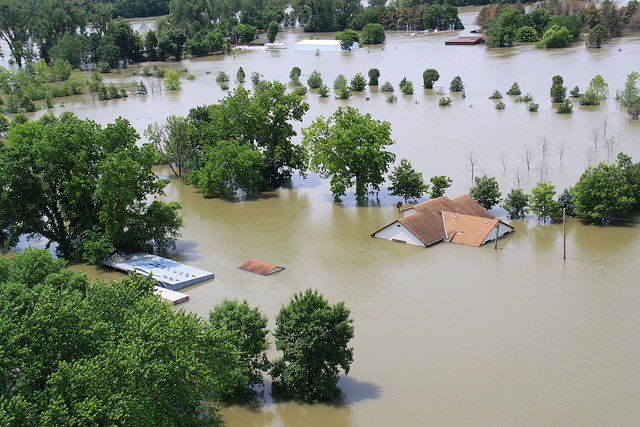





 Way back in 2008, my teenage niece introduced me to memory boards. I was in need of suggestions for things teens might be interested in making. She had recently made a circular ribbon board out of cardboard, quilt batting, fabric, ribbons, buttons and glue. I got the supplies and she demonstrated. I loved it. I made them with teens at the library, and they seemed to enjoy them as well!