A refugee takes great risks to get control of her toaster. A superhero makes a misguided attempt to address racism and police corruption. A husband’s frustrations with health insurance coverage for his sick wife lead him down an internet rabbit hole to radicalization. A wealthy finance-bro retreats to his underground bunker when civilization gets unstable. These are the plots of the four novellas comprising Cory Doctorow’s “Radicalized.” They are all extremely timely — they practically scream, “TOPICAL!” The subtitle is in fact, “Four Tales of Our Present Moment.” Subtle messaging isn’t the goal here, but the stories are told with the nuance that complex issues deserve, and the characters are given a depth that makes you care about them.
The first story, “Unauthorized Bread,” is the strongest of the collection. It deftly explores themes of a refugee crisis, stark income disparities, exploitation of vulnerable populations and how much proprietary technology dictates our lives. When the main character learns how to hack the software in her toaster so it will make any kind of bread she wants, she soon ends up liberating appliances throughout her apartment building. As the risks of these actions become apparent, she is faced with difficult decisions. Continue reading “Know Your Dystopias: Radicalized”
Here is a quick look at the most noteworthy nonfiction titles being released this July. Visit our catalog for a more extensive list.
Top Picks
“Crisis in the Red Zone: The Story of the Deadliest Ebola Outbreak in History, and the Outbreaks to Come” by Richard Preston
This time, Ebola started with a two-year-old child who likely had contact with a wild creature and whose whole family quickly fell ill and died. The ensuing global drama activated health professionals in North America, Europe, and Africa in a desperate race against time to contain the viral wildfire. By the end — as the virus mutated into its deadliest form, and spread farther and faster than ever before — 30,000 people would be infected, and the dead would be spread across eight countries on three continents. In this taut and suspenseful medical drama, Richard Preston deeply chronicles the outbreak, in which we saw for the first time the specter of Ebola jumping continents, crossing the Atlantic, and infecting people in America. Preston writes of doctors and nurses in the field putting their own lives on the line, of government bureaucrats and NGO administrators moving, often fitfully, to try to contain the outbreak, and of pharmaceutical companies racing to develop drugs to combat the virus. The more we discover about the virosphere, the more we realize its deadly potential. “Crisis in the Red Zone” is an exquisitely timely book, a stark warning of viral outbreaks to come. Continue reading “Nonfiction Roundup: July 2019”
There were several big events that occurred in 1969. I will be doing a series of posts that focus on these important events and share some library materials about these events for library patrons to check out!
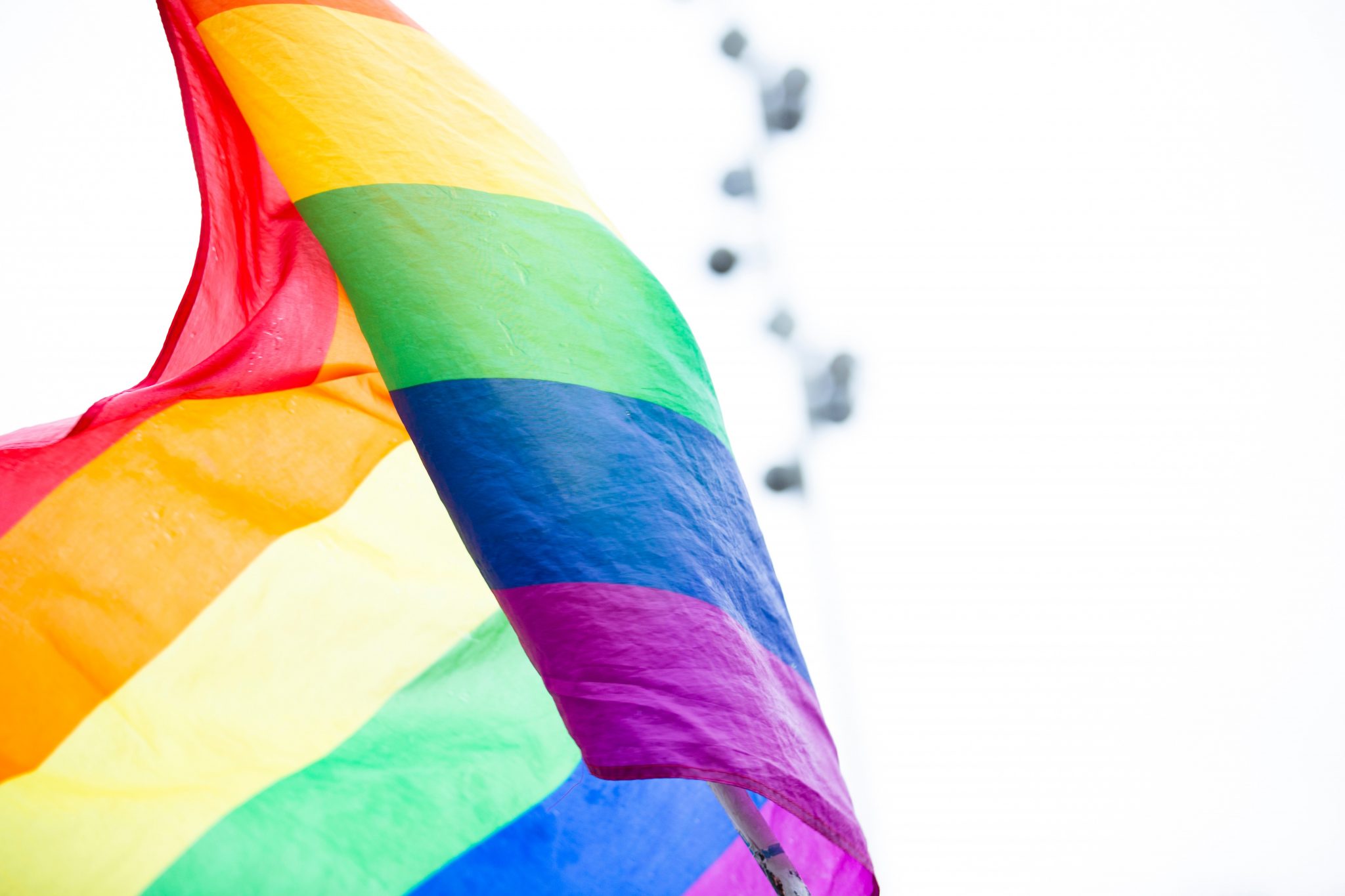
The Stonewall Riots occurred on June 28, 1969. New York City Police raided the Stonewall Inn, a gay bar, in Greenwich Village. This raid sparked push back from the gay community of New York City and beyond. The Stonewall Riots help strengthen the Gay Liberation Front and lead to the formation of the Gay Activists Alliance. It also lead to the first Gay Pride March that occurred one year later on June 28, 1970.
Books
“The Stonewall Reader: Edited by the New York Public Library” by New York Public Library, Edmund White (Foreword)
June 28, 2019 marks the fiftieth anniversary of the Stonewall uprising, which is considered the most significant event in the gay liberation movement, and the catalyst for the modern fight for LGBTQ rights in the United States. Drawing from the New York Public Library’s archives, “The Stonewall Reader” is a collection of first accounts, diaries, periodic literature, and articles from LGBTQ magazines and newspapers that documented both the years leading up to and the years following the riots. Most importantly the anthology spotlights both iconic activists who were pivotal in the movement, such as Sylvia Rivera, co-founder of Street Transvestites Action Revolutionaries (STAR), as well as forgotten figures like Ernestine Eckstein, one of the few out, African American, lesbian activists in the 1960s. The anthology focuses on the events of 1969, the five years before, and the five years after. Continue reading “50th Anniversary: Stonewall Riots”
Posted on Thursday, June 27, 2019 by patron reviewer
“The Secrets We Bury” is a good mystery/suspense book that doesn’t make the main character seem like an idiot. I prefer this genre but this is the only book I’ve read so far that’s actually had moments that creeped me out. It flowed perfectly so there was never a time I felt bored, which I personally find rare. I can usually predict how a book is going to end or who will be the main culprit but this actually surprised me a little. If you like murder mysteries or the suspense genre, I recommend this book for sure.
Three words that describe this book: Good suspenseful read
You might want to pick this book up if: You like murder mysteries.
It’s hot outside, which means people with sufficient funds who live in the vicinity of movie theaters are watching “blockbusters.” Those with the means to attend movies (but not to attend them in the private theater located conveniently on their grounds) are purchasing buckets of soda and cauldrons of popped corn and escaping into the air conditioning to immerse themselves in a fantasy world in which the most powerful people are good, strong, sane, and photogenic.
But suppose you lack the funds for cinema and/or also enjoy reading. What is one to do? I insist the library has the cure for what ails you: “blockbuster” books. You might be wondering how you’ll keep cool without the icy embrace of the local cinema. Your best course of action might be to read your blockbuster book in the comfort of your local library, but I understand some of you prefer to read at home with ready access to your domesticated animals, snacks, and the toilet that knows you best. There are many methods to achieve a comfortable temperature, though you’ll have to be pretty tiny to fit inside your fridge, and visiting your neighbors so that you can surreptitiously fill hundreds of garbage bags with their air conditioned air and then release your ill-gotten cool inside your own home doesn’t work as well as you might suppose. Perhaps place a dollop of cubed ice on a shaved portion of your scalp? As a gentleman of means, I’ll simply activate a machine built for the sole purpose of fanning me. Continue reading “The Gentleman Recommends: Tom Sweterlitsch”
We’re now entering the dog days of summer, and what better time to take up a reading challenge? Our library is participating in Book Riot’s Read Harder Challenge, which encourages you to read more broadly. It’s never late to join us! June is also LGBT+ pride month, a commemoration of the 1969 Stonewall riots and recognition of the impact of LGBT people on society. In honor of pride month, here are a few books that work for task 21: A comic by an LGBTQIA creator. Note, the creators here may not identify under the specific LGBTQIA acronym, but within an expanded LGBT+ acronym.
Nonfiction & Memoir:
Queer theory and history is an endlessly complex topic even for the most academic-minded reader; where should one start? Meg-John Barker and Julia Scheele’s “Queer: A Graphic History” does a good job at condensing some of the central arguments and tenets about sex, gender, and sexuality from thinkers like Judith Butler, Adrienne Rich, and many more. Continue reading “Comics by LGBTQ+ Creators: Read Harder 2019”
Posted on Thursday, June 20, 2019 by patron reviewer
“Dear Martin” is about a high school senior, Justyce McAllister, and the issues he faces with racism as a black student attending a predominately white college prep school. He is a smart student but still encounters unjust suspicion and prejudice from fellow white students and members of the community, especially the police. Justyce writes letters to Martin Luther King, Jr in his journal in an effort to sort through his thoughts and find answers. This book is timely and relevant to issues we currently face in America today. It is a believable story that could easily be made into a movie.
Three words that describe this book: relevant, timely, believable
You might want to pick this book up if: You are a teen or you enjoyed the book “The Hate U Give.”
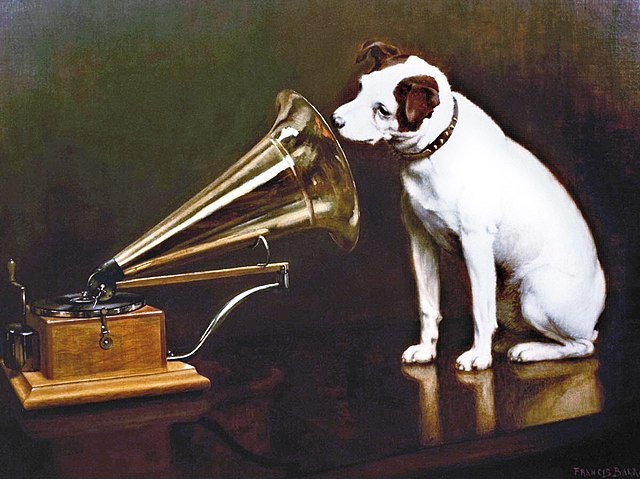
“His Master’s Voice, by Francis Barraud [Public domain]OK, so “Audiobook Appreciation Month” doesn’t just roll off the tongue, but the sentiment is real. School’s out and it’s time for vacations. (Don’t make me come back there!) So it’s handy that June is also Audiobook Appreciation Month. You can make the miles fly by with a great audio book. Or you can make the time doing chores more interesting.
I have learned to love audio books, and I listen to them all the time now. I first started listening to them during long car trips with the kids, so naturally some of my very favorites are kid’s books. But don’t be afraid to grab a kid’s book for yourself. One of my favorites is “The Bad Beginning” by Lemony Snickett. It tells the story of three orphans who go to live with a greedy uncle who has designs on their fortune. There is incredible misfortune and a deep dark mystery to be solved but the children are strong, intelligent and brave. And with the audio book, how can you go wrong with Tim Curry as the narrator? And this is just the first book in a 13 book series. Continue reading “Happy Audiobook Appreciation Month!”
Summer reading is here and it’s not just for the kids! If you’re searching for books to fill those long summer days, look no further. These are just a few of the novels by debut authors finding a home on our shelves this month. Don’t forget to visit our catalog to see the rest.
In a sleepy seaside town in Maine, recently widowed Eveleth “Evvie” Drake rarely leaves her large, painfully empty house nearly a year after her husband’s death in a car crash. Everyone in town, even her best friend, Andy, thinks grief keeps her locked inside, and Evvie doesn’t correct them.
Meanwhile, in New York City, Dean Tenney, former Major League pitcher and Andy’s childhood best friend, is wrestling with what miserable athletes living out their worst nightmares call the “yips”: he can’t throw straight anymore, and, even worse, he can’t figure out why. As the media storm heats up, an invitation from Andy to stay in Maine seems like the perfect chance to hit the reset button on Dean’s future.
When he moves into an apartment at the back of Evvie’s house, the two make a deal: Dean won’t ask about Evvie’s late husband, and Evvie won’t ask about Dean’s baseball career. Rules, though, have a funny way of being broken—and what starts as an unexpected friendship soon turns into something more. To move forward, Evvie and Dean will have to reckon with their pasts—the friendships they’ve damaged, the secrets they’ve kept—but in life, as in baseball, there’s always a chance—up until the last out.
Posted on Thursday, June 13, 2019 by patron reviewer
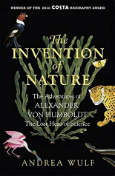
“The Invention of Nature” is about Alexander von Humboldt, one of the greatest scientists of the 19th century. He influenced Darwin, George Perkins Marsh and John Muir, among many others. He developed the idea of the interconnectedness of all life on earth and with non-living geologic and meteorologic forces. He recognized early during Industrialization some of the future consequences we would be dealing with today. The book is well-written, thoroughly researched, and written in an easily readable style. Author Andrea Wulf brings Humboldt and his adventures to life.
Three words that describe this book: Currently applicable history.
You might want to pick this book up if: You’re interested in the origins of climate change and the change in attitudes toward science between the 19th century and early 21st.