“Machine intelligence is the last invention that humanity will ever need to make.” – Nick Bostrom
As a child, I would watch reruns of “The Jetsons” and dream about the days when my car would fly and a robot would clean my house. It’s difficult to believe, but that future of which I dreamt is here. And although there is a lot that we still can’t do (flying cars I’m looking at you), technology is running more aspects of our lives every day. It’s also practically impossible to turn on the television, flip on the radio or check your social media feed without seeing mention of artificial intelligence (AI). Fears abound that this technology might someday overpower the human race. Will AI be the end of us or will it put us on an exciting new path? Let’s take a look at a few recent titles that explore the topic. Continue reading “Literary Links: Artificial Intelligence”
You might think I would have a healthier appreciation for Shakespeare, given how many times I watched and rewatched “The Lion King” growing up; the VHS would end, and I would immediately demand it be rewound and restarted. It is a Shakespeare retelling, after all, “Hamlet” specifically. A king murdered by his brother, his son cast out, only to come back and reclaim the throne. Maybe the Disney version is a little lighter and features the voice talents of James Earl Jones and Nathan Lane, but it’s still (mostly) “Hamlet” and sometimes just as dark. But as I entered high school and started reading more from the Bard, I found it difficult to follow characters and plots, and especially the language. Shakespeare has staying power though, and many authors have put pens to paper to revisit, recontextualize, and sometimes just rewrite the stories we know. Continue reading “Shakespeare, Retold”
Below I’m highlighting some nonfiction books coming out in November. All of the mentioned titles are available to put on hold in our catalog and will also be made available via the library’s Overdrive website on the day of publication in eBook and downloadable audiobook format (as available). For a more extensive list of new nonfiction books coming out this month, check our online catalog.
Top Picks
 “Class: A Memoir of Motherhood, Hunger, and Higher Education” by Stephanie Land (Nov 7)
When Stephanie Land set out to write her memoir “Maid,” she never could have imagined what was to come. Later it was adapted into the hit Netflix series, which was viewed by 67 million households and was Netflix’s fourth most-watched show in 2021, garnering three Primetime Emmy Award nominations. Stephanie’s escape out of poverty and abuse in search of a better life inspired millions. “Maid” was a story about a housecleaner, but it was also a story about a woman with a dream. In “Class,” Land takes us with her as she finishes college and pursues her writing career. Facing barriers at every turn including a byzantine loan system, not having enough money for food, navigating the judgments of professors and fellow students who didn’t understand the demands of attending college while under the poverty line — Land finds a way to survive once again, finally graduating in her mid-thirties. “Class” paints an intimate and heartbreaking portrait of motherhood as it converges and often conflicts with personal desire and professional ambition. Who has the right to create art? Who has the right to go to college? And what kind of work is valued in our culture? In clear, candid, and moving prose, “Class” grapples with these questions, offering a searing indictment of America’s educational system and an inspiring testimony of a mother’s triumph against all odds. Continue reading “Nonfiction Roundup: November 2023”
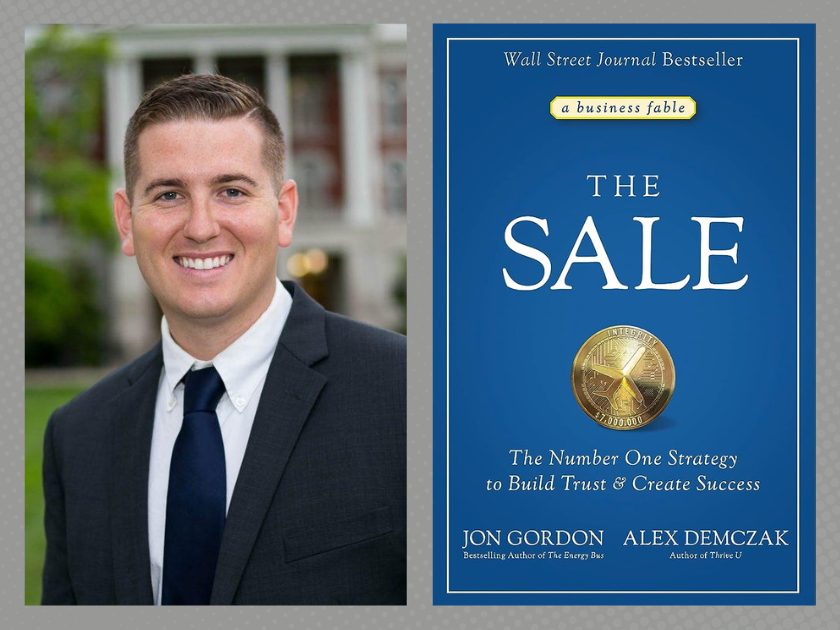
Alex Demczak is a Columbia, MO author and speaker who has co-authored a book with Jon Gordon called “The Sale.” The book is a fictional business fable that teaches four lessons about integrity to create lasting success. Demczak is a former quarterback for the Missouri Tigers who has gone on to be a keynote speaker and entrepreneur, most recently co-founding Streamline Books. His first book, “Thrive U,” is an inspirational collection of stories from 100 collegiate and professional athletes from across the country. He was kind enough to take the time to be interviewed via email. Continue reading “Q&A With Alex Demczak, Co-author of “The Sale””
October 21, 2023 would have been Ursula K. Le Guin’s 94th birthday. On October 25, 2023, the winner of the second annual Ursula K. Le Guin Prize for Fiction will be announced. Ahead of the award announcement, we’re reflecting on some of Le Guin’s works in a series of blog posts: Le Guin and Her Legacy. Interested in some of the authors Ursula inspired? Click here to see the titles nominated for the prize, as well as titles by the judges!
Spoiler warning: Given how short this story is, and how integral the title is to any discussion, this post will discuss in detail the events within. If you have any interest, I highly recommend reading the story before continuing with this post. Content Warning: The subject of this post is a story that contains child abuse and neglect. (If these are subjects you are not comfortable reading about, you might check out these animal live cam feeds for something lighter.)
“The Ones Who Walk Away from Omelas” was originally published in 1973, in a collection of short science fiction stories from various authors. It was republished in Le Guin’s 1975 “The Wind’s Twelve Quarters,” and has since been widely published online and in other short story collections. Continue reading “Le Guin and Her Legacy: The Ones Who Walk Away from Omelas”
Ahead of the second annual Ursula K. Le Guin Prize for Fiction, we’re reflecting on some of Le Guin’s works in a series of blog posts: Le Guin and Her Legacy.
Ursula K. Le Guin (1929 – 2018) was an author and poet who wrote science fiction and fantasy for adults and young adults. Her works garnered her six Nebula Awards, seven Hugo Awards, and many, many more accolades. 2023 marks the second annual Ursula K. Le Guin Prize for Fiction. The award is intended to recognize those writers Ursula spoke of in her 2014 National Book Awards speech — realists of a larger reality, who can imagine real grounds for hope and see alternatives to how we live now. The Prize is given to a writer whose work reflects the concepts and ideas that were central to Ursula’s own work, including but not limited to: hope, equity, and freedom; non-violence and alternatives to conflict; and a holistic view of humanity’s place in the natural world. Continue reading “Le Guin and Her Legacy: Seasons of the Ansarac”
As fans of the X-Files will remember, “The Truth Is Out There” was a catchphrase for the show. Recently, our government has become more interested in searching for the truth about the possibility of extraterrestrial life and UAPs (unidentified aerial phenomena) or UFOs (unidentified flying objects.) Once thought of as largely a conspiracy theory, there has been more attention by Congress on observations reported by reputable professionals, such as military/commercial pilots and other individuals that have a more complex knowledge of what current technology can produce than, well, someone like me.
A recent hearing before the U.S. House Committee on Oversight and Accountability featured several testimonies from former military pilots with firsthand accounts of UAPs along with testimony from David Grusch, whistleblower and former Defense Department employee. Retired Navy commander David Fravor, the commanding officer of Strike Fighter Squadron 41 in 2004, indicated the observation of an unrecognizable object by himself and his pilots that could rapidly descend from 80,000 to 20,000 feet and hover there for hours. There have been many visual sightings of different unexplained phenomena over the years, and part of the hearing discussed the difficulties with reporting these observations and repercussions for those that do.
Altogether it made very interesting listening, I have never thought a lot about this possibility (except during my children’s teen years). After listening to this thoughtful testimony by reputable professionals, my mind is open to some exploration, and I invite you to do the same. Continue reading “Literary Links: The Truth Is Out There”
Below I’m highlighting some nonfiction books coming out in October. All of the mentioned titles are available to put on hold in our catalog and will also be made available via the library’s Overdrive website on the day of publication in eBook and downloadable audiobook format (as available). For a more extensive list of new nonfiction books coming out this month, check our online catalog.
Top Picks
 “The Sisterhood: The Secret History of Women at the CIA” by Liza Mundy (Oct 17)
Created in the aftermath of World War II, the Central Intelligence Agency relied on women even as it attempted to channel their talents and keep them down. Women sent cables, made dead drops, and maintained the agency’s secrets. Despite discrimination — even because of it — women who started as clerks, secretaries or unpaid spouses rose to become some of the CIA’s shrewdest operatives. They were unlikely spies — and that’s exactly what made them perfect for the role. Because women were seen as unimportant, pioneering female intelligence officers moved unnoticed around Bonn, Geneva and Moscow, stealing secrets from under the noses of their KGB adversaries. Back at headquarters, women built the CIA’s critical archives — first by hand, then by computer. And they noticed things that the men at the top didn’t see. As the CIA faced an identity crisis after the Cold War, it was a close-knit network of female analysts who spotted the rising threat of al-Qaeda — though their warnings were repeatedly brushed aside. After the 9/11 attacks, more women joined the agency as a new job, targeter, came to prominence. They showed that data analysis would be crucial to the post-9/11 national security landscape — an effort that culminated spectacularly in the CIA’s successful effort to track down bin Laden in his Pakistani compound. Continue reading “Nonfiction Roundup: October 2023”
“Love, it seems, arrives not only unannounced, but so accidentally, so randomly, as to make you wonder why you, why anyone, believes even fleetingly in laws of cause and effect.”
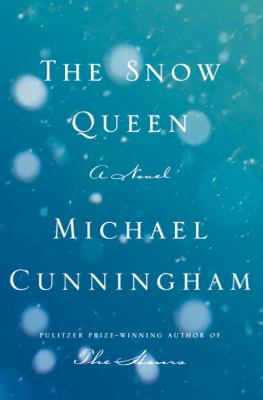
So writes Michael Cunningham in his 2014 novel “The Snow Queen.“ It is a gentle novel, the kind that builds slowly, in waves, rather than the kind that whisks you away. But there are moments like this one, observations about love and life that induce a powerful feeling of clarity and reflection, that give the story real weight.
 We meet Barrett first, in his own moment of observation. To be more precise, what Barrett observes is a giant light in the sky hovering above Central Park one winter night. The light arrives at a good time — Barrett is recovering from the sudden termination of another relationship, and coping with a general feeling of floundering as an adult human living in the new millennium. The light seems to promise something, though he’s not sure what. At the very least, just bearing witness to such a thing makes him feel like there might be something special, something worth examining about his earthly experience after all. Continue reading “Staff Review: The Snow Queen by Michael Cunningham”
“If all printers were determined not to print anything till they were sure it would offend nobody, there would be very little printed.” ― Benjamin Franklin, Founding Father of the United States

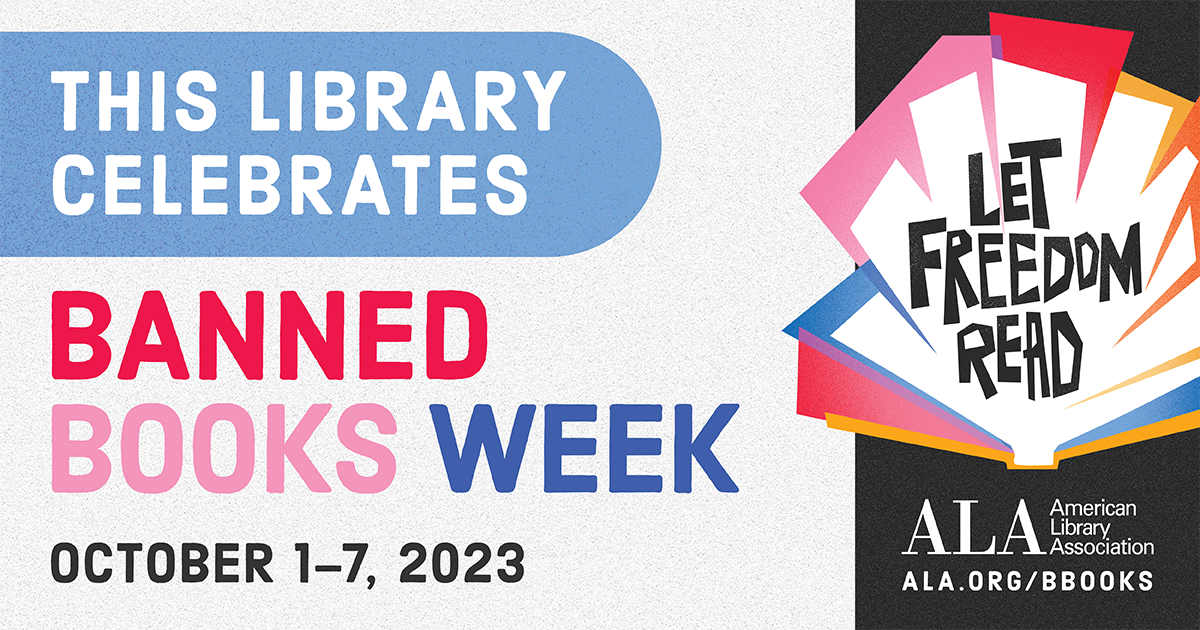
 Banned Books Week is upon us once again: October 1-7. The theme chosen this year by the American Library Association (ALA) is “Let Freedom Read” with the slogan “Free People Read Freely.” I love this theme. I love freedom. And really, who doesn’t? Some of our greatest leaders have supported the idea of the freedom to read. President Dwight D. Eisenhower gave a commencement address at Dartmouth University on June 14, 1953 in which he said “Don’t join the book burners. Don’t think you’re going to conceal faults by concealing evidence that they ever existed. Don’t be afraid to go in [sic] your library and read every book…” And from across the aisle, upon signing the amendment to the Library Services Act February 11, 1964, Lyndon B Johnson said “The central fact of our times is this: Books and ideas are the most effective weapons against intolerance and ignorance.” Continue reading “Let Freedom Read!”