I’ve always had a HUGE sweet tooth and have my mother to thank for this: as the family lore goes, when carrying me to term in the summer of my birth, she devoured an entire peach pie by herself. #GoodForHer #HappyBelatedMothersDay 💖🍑💖
But a very unwelcome bodily change hit me around my early twenties: though I LOVE candy in all its sugary forms, I can no longer digest most of it. While I’ve since made peace with my body’s dietary shift, there is still a part of me that is always searching for a lil treat to fill the sour gummy worm hole in the dirt cup that is my heart. On my journey into alternative candies, I’ve been delighted to discover that candied citrus peel 1. doesn’t upset my tender digestive disposition and 2. is actually pretty easy to make yourself via a little kitchen witchery! Texturally, the candied peel is wonderfully chewy (but not tacky) and both tastes and looks quite vibrant all on its own. Moreover, if your own dietary journey requires less sugar, since you’re candying the peel yourself, you get to decide how much sugar to add &/or whether to use a sugar-substitute, like sucralose or stevia.
After consulting a few recipes available in DBRL’s vast cookbook collection (which can be found at the nonfiction call number 641.5 in the Children’s, Teen and Adult areas!), I landed on a quick, straightforward version from Marie Asselin‘s “Simply Citrus,” which is currently available as an eBook on hoopla. Let’s get into it!
For this recipe, you will need
Housewares:
- a small saucepan that can hold 3-4 cups of liquid
- a vegetable peeler
- a small kitchen knife [I used a steak knife]
- measuring cups (1 cup, 1/2 cup + 1/4 cup) and measuring spoons (1 teaspoon)
- a colander
- a small heat-proof bowl
- a cutting board / clean cutting surface
- access to a stove or hot plate and sink
Ingredients:
- a variety of citrus fruits of your choice
- The quantity really depends on your preference of fruit and how much candied peel you’d like to end up with. For example, you’ll need more limes than grapefruits if candying one type of citrus because limes are quite smaller than grapefruits and thus have less peel to work with.
- Another quality to consider is the zingy-ness of the citrus itself: the oranges I candied ended up tasting milder/sweeter than the limes, which carried over a lot of their sourness (which I found quite pleasing!).
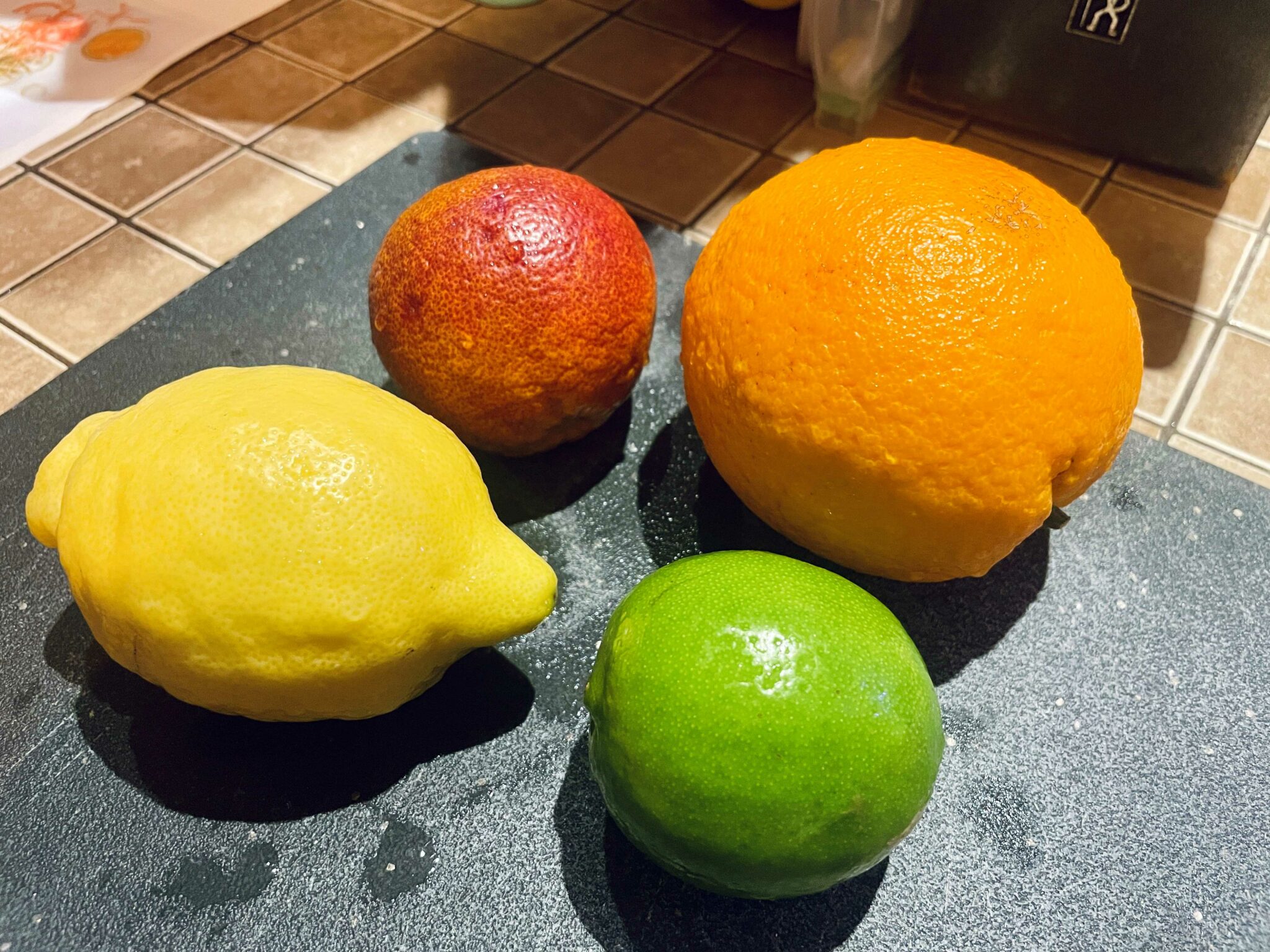
- I used one blood orange, one navel orange, one lemon and one lime, which yielded about 1/3 cup of mixed candied peels.
- 2 pot-fuls of water (for boiling)
- 1 cup of water (for candying)
- 1 cup of sugar (or sugar-substitute, for candying)
- 1/4 cup honey or maple syrup (for candying; optional)
- 1/4 – 1/2 cup citrus juice (for candying)
- 1 teaspoon vanilla extract (for candying; optional)
- 1/4 – 1/2 cup of sugar, citric acid, chili powder or other dried herb/spice/sprinkle of your choice (for rolling the finished candied peels in; optional)
Process
First, you’ll want to give your citrus of choice a good rinse, especially since the rind (the outside) is what you’ll eventually be devouring yourself. Then, you’ll want to CAREFULLY start peeling the rind off the fruit with your vegetable peeler. Remember: vegetable peelers are SHARP. It is always best practice to use a light gliding motion across the rind with the peeler; the harder you press down, the less control you’ll have, which makes the sharp object more dangerous. (Grae’s 1st law of sharp object motion: more force + less control = major ouchie.)
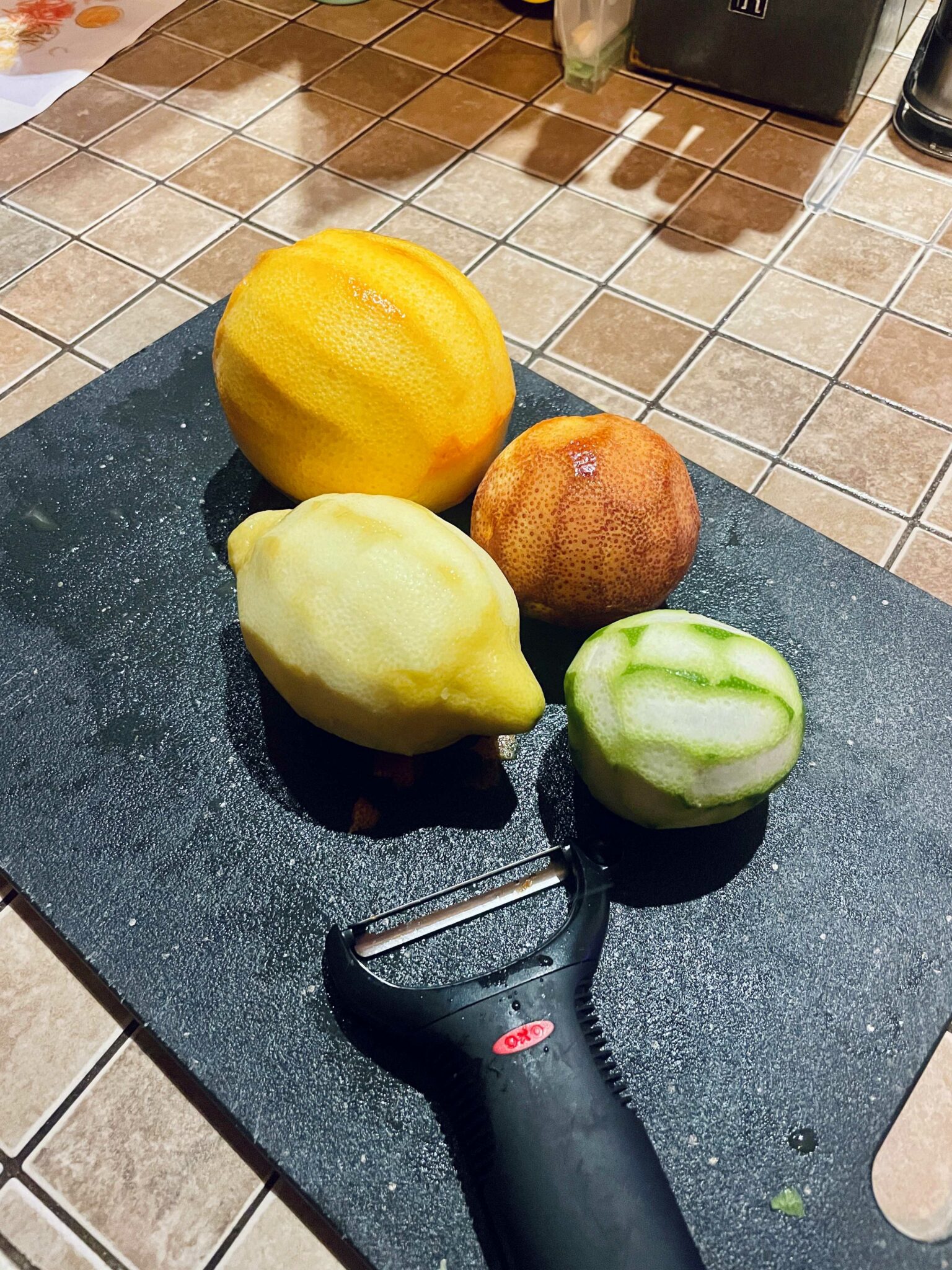
I found that a vegetable peeler made this part of the recipe go by very quickly and smoothly, but you could shave or cut the rind off with a knife. If going this route, you want to make sure you cut away as much pith — the white, bitter part of the rind — as possible from the zest — the colorful, flavorful, fragrant part of the rind. The peeler worked really great in that it peeled off the thin layer of zest and avoided most of the pith. The peeler also pre-portioned the rind into manageable strips, so I didn’t have to trim them down.
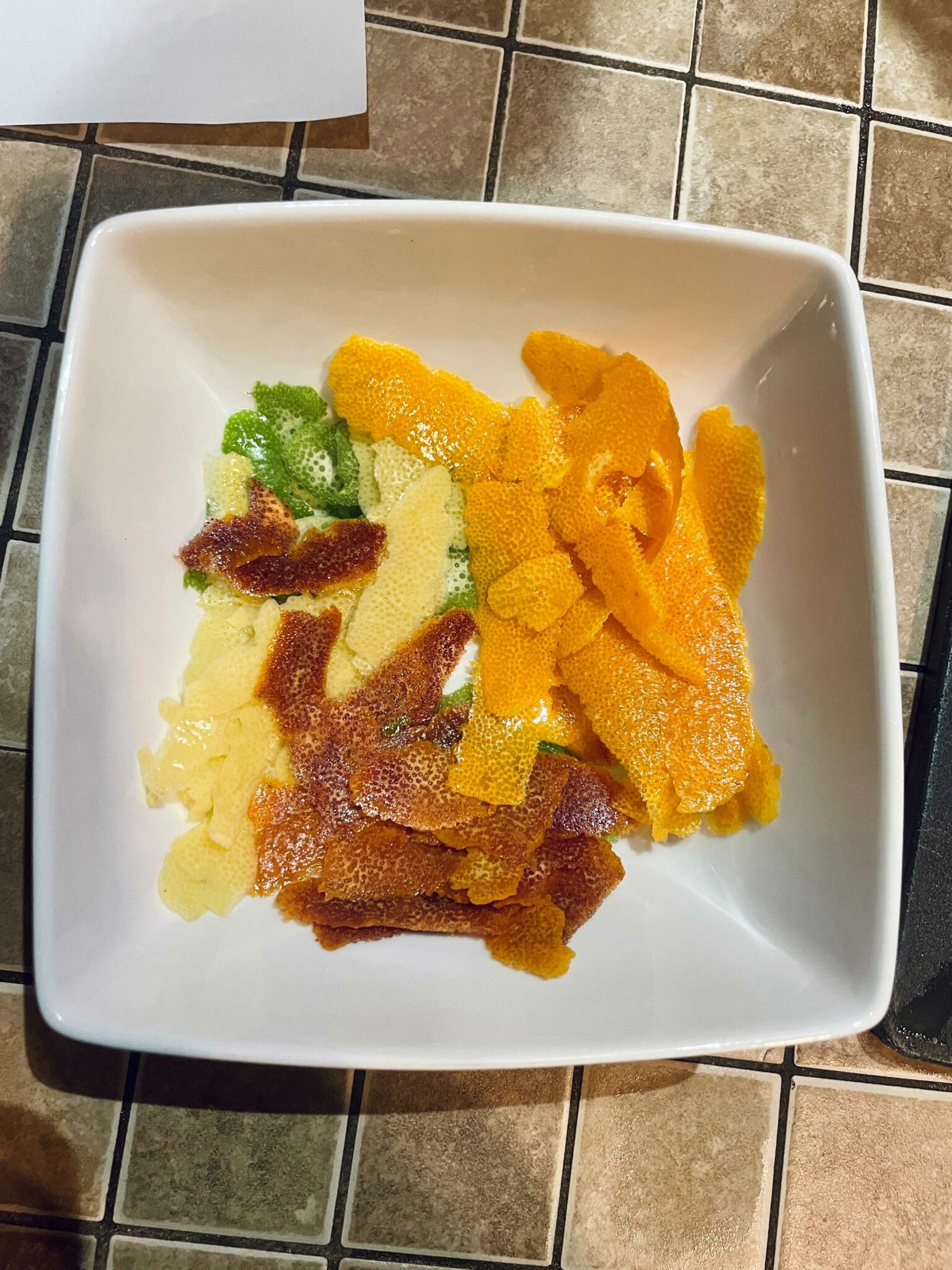
After removing the zest from your citrus supply, juice the fruits until you have 1/4 – 1/2 cup of liquid and reserve it for later in the recipe. If you have more juice than 1/4 – 1/2 cups, feel free to drink it or save for another recipe.
Once you have a gorgeous and aromatic supply of citrus peels, it’s time to boil them, twice. Boiling preps the peels for candying by softening them and reducing their bitterness. Fill your small saucepan with water and bring it to a boil. When the water is boiling, dump in the peels, keep the heat high but stable and simmer for 5 minutes.

After the 5 minutes have passed, turn off the heat and pour the peels and boiling liquid through a colander over the sink, saving the peels for another round of boiling. You can discard the boiling liquid. After the peels have been drained, tip them back into the saucepan from the colander and cover them with a couple cups of water, then put the pot back on the heat and boil the peels again. For this round of boiling, you’ll be starting with the peels in the water, so they will continue softening while the water comes to a boil. Once the water begins boiling, keep the heat high but stable and set your timer for another 5 minutes.
After the timer goes off, turn off the heat and pour the peels and boiling liquid through a colander over the sink, saving the peels and discarding the boiling liquid. Keep the peels in the colander and rinse them briefly with cold water. Set aside in a small heat-proof bowl.
Once the peels have been boiled twice, it’s time to start candying! In your small saucepan, combine 1 cup of water, 1 cup of sugar (or sugar-substitute), 1/4 – 1/2 cup of citrus juice, 1/4 cup honey or maple syrup and 1 teaspoon of vanilla extract, then bring this mixture to a boil. You’ll want to boil this mixture until all the sugar has dissolved into the candying broth, which usually happens just a minute or two after the mixture starts boiling. Feel free to stir the sugar in the hot candying broth to speed up the process.
Once the sugar is dissolved, put your twice-boiled peels into the pot, lower the heat to medium and simmer uncovered for 20-25 minutes, stirring occasionally so the broth, as it reduces into a syrup, and peels don’t clump in one place and burn. After the timer goes off, turn off the heat and let the pot of candied peels and syrup cool on the stove or hot plate until they come back to room temperature (anywhere from 30 mins to an hour-ish).
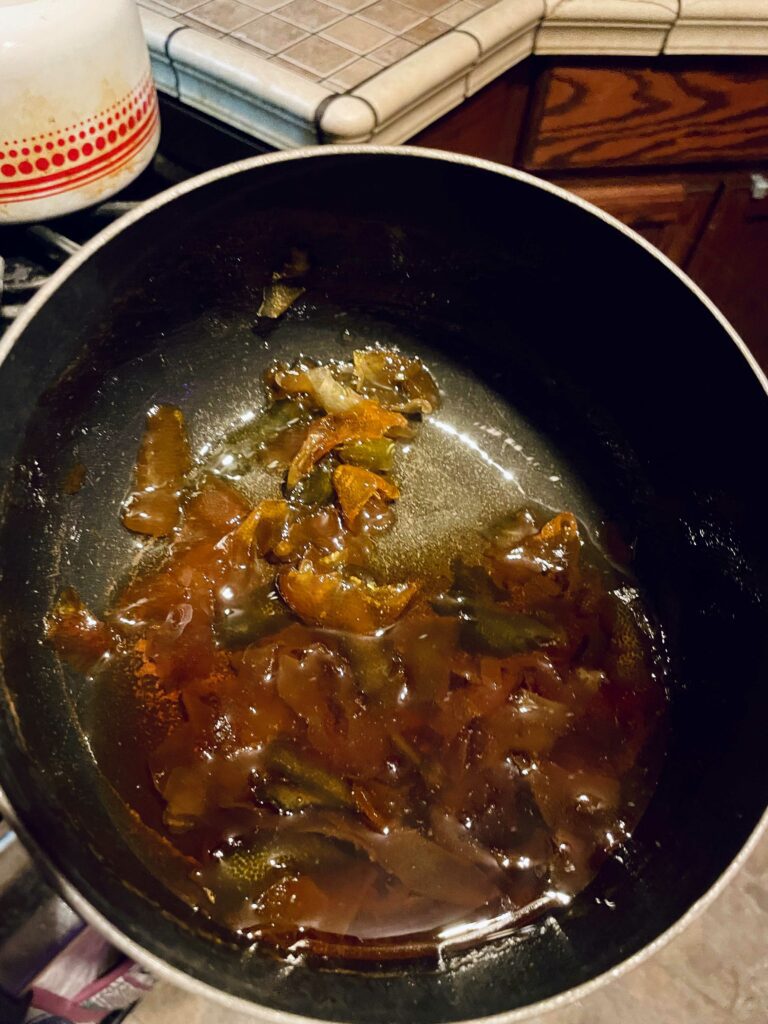
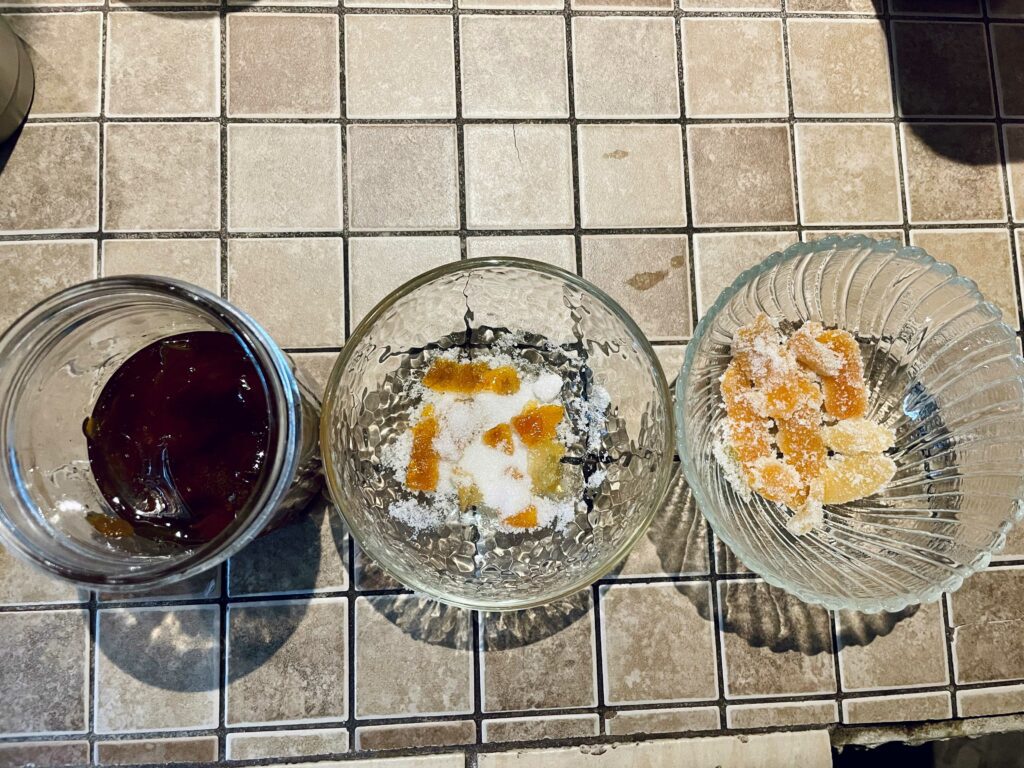
You can now transfer the candied peels and their syrup into a jar to refrigerate for later use: they’ll be good refrigerated for up to a month, though whether you’ll be able to save them and not devour them immediately is another story. 😈
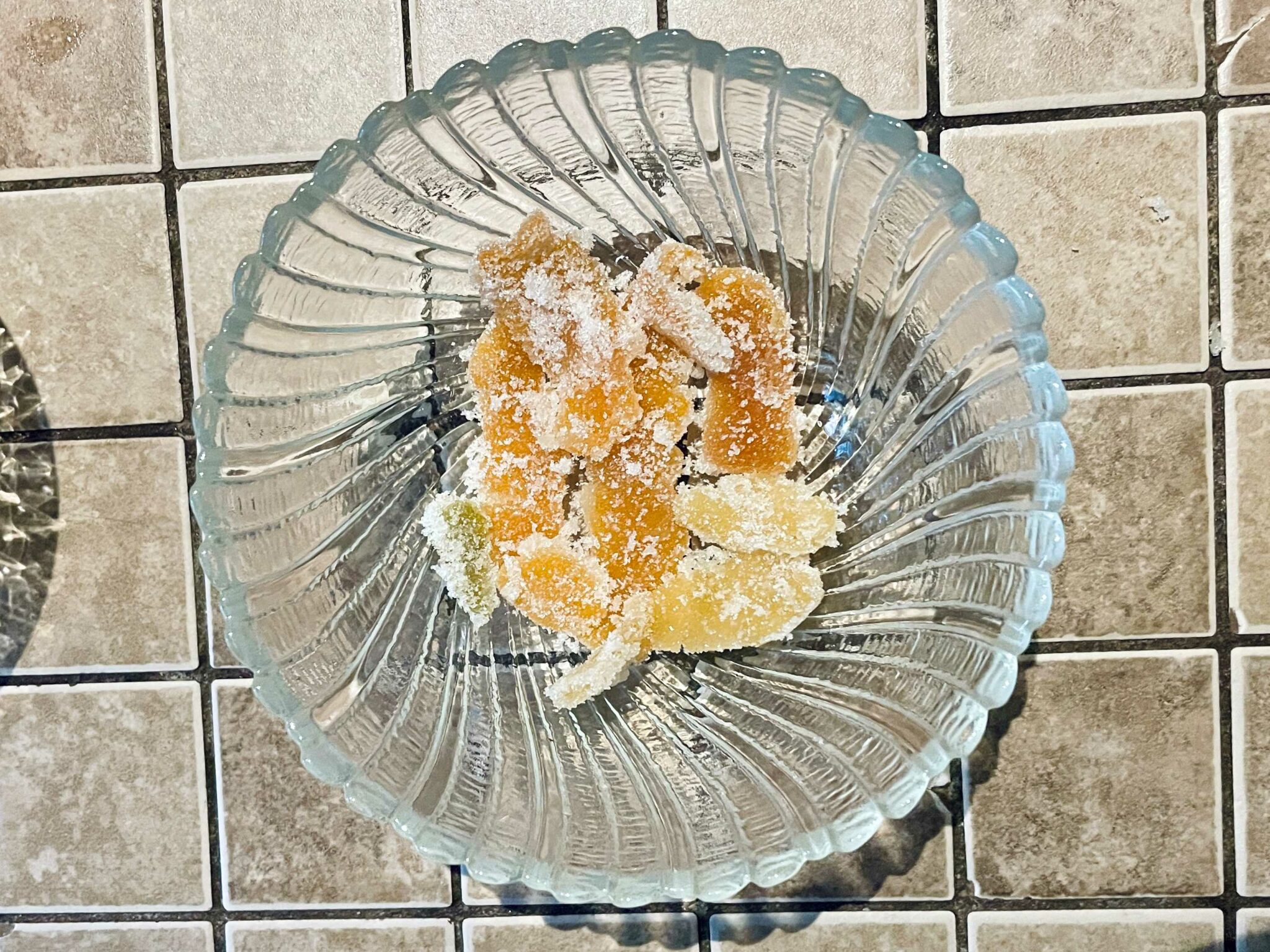
Alternatively, you can drain the peels from the syrup and roll them in your preferred spice, be it sugar, citric acid (what makes sour candy sour), chili powder or some other delicious substance. You could even melt chocolate and dip the drained candied peels in it. The possibilities are scrumptiously endless!