
Many mwahaha tidings of toned-down terror to all of my fellow whimsigoths, baby bats and self-proclaimed scaredy cats! While society at large might be turning the calendar page on spooky season this upcoming weekend, we true believers know it is always Halloween in our souls. 🦇🎃❣️ Which means it is (always) time for another installment of Spooky, Not Scary — a watch-list designed with the gentlest ghosties in mind. 👻🫶🏼
For those just joining in, I give you the following titles that are avowedly Spooky, Not Scary™. Each title is rated on a scale of 0-5 smashed pumpkins. The more smashed pumpkins (which I’ve metaphorically dropped out of terror), the closer the tv show/movie/video is to being truly frightening.
Note: no gourds were harmed in the making of this list, though some may have been consumed, especially if transformed via kitchen witchery into a baked good evil. 😈✨🍞🍪
You can access the full list of this year’s picks at this link (as well as volume one at this link; volume two a.k.a. boo! at this link; and volume threeeeeeek! at this link); what follows are some of my not-so-fearsome favs with minimal spoilers.
Shaun the Sheep: Little Sheep of Horrors
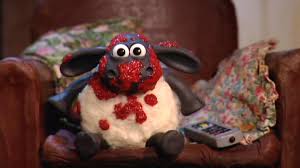
While I was raised on the quintessentially British stop-motion marvel that is Wallace & Gromit, I came to the adorable farmyard chaos of Shaun the Sheep later in life. Much like the endlessly expressive yet silent Gromit — sidebar: do we have Gromit to thank for the side-eye emoji??? 👀 — Shaun the Sheep and his flock convey the highest of hijinks and the tenderest of emotional moments on their Northern England farm with nary a word spoken beyond the occasional mumble-grunt from the series’ bumbling farmer and, of course, a resounding chorus of bleaaaats and baaaaas from the sheep themselves. The six episodes in this creepy compendium — “Little Sheep of Horrors,” “Abracadabra,” “Things That Go Bump,” “Heavy Metal Shaun,” “Troublesome Tractor” and “Sheepwalking” — use their dialogue-less soundscapes to incredible effect, in humorous and almost (!) horrifying ways. If you couldn’t already tell from the pun-laden titles, the creators are well aware of the horror genre’s conventions and poke delightfully unfrightful fun at them in “Little Sheep of Horrors” and “Things That Go Bump” especially.
0 – 🎃/🎃🎃🎃🎃🎃 for delightfully unfrightful farmyard lambpoonery. 5/5 sheep howls from Timmy, the tiny napping terror in “Little Sheep of Horrors.” Shoutout to Bitzer, a sheepdog who gives off major elder sibling energy, for his wickedly cool knitted cap! 😎🐶🧢🧶
KiKi’s Delivery Service
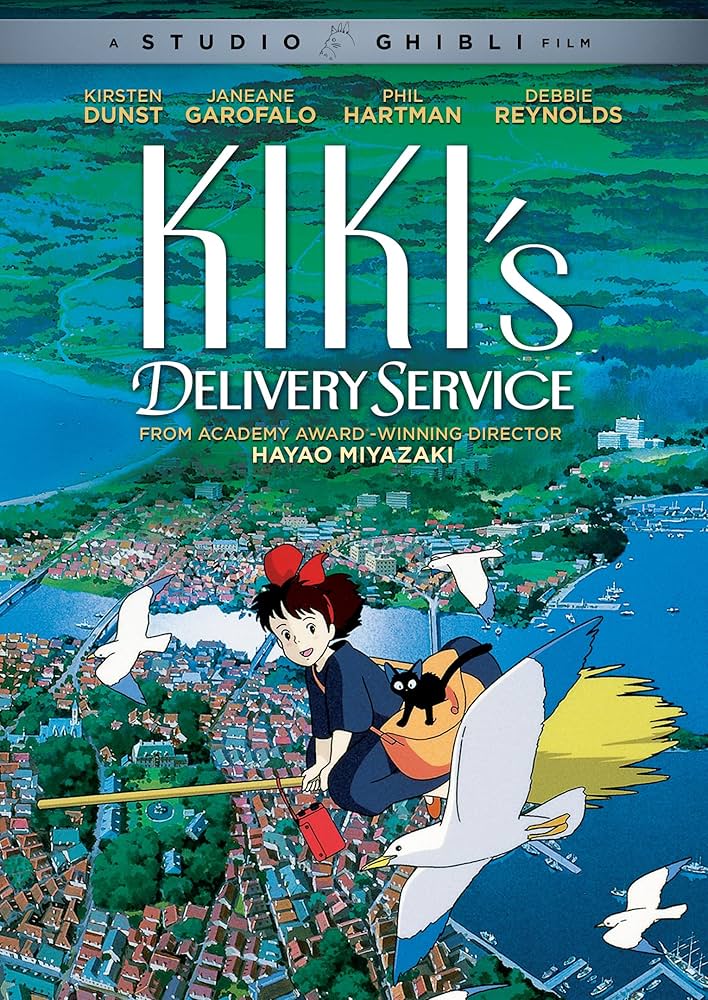
If dressing up for Halloween for you means slipping into your favorite set of hooded footie pajamas and enjoying a warm mug of maple ginger tea, then you’ll love the snug & cosy slice-of-a-young-witch’s-life vibes of “Kiki’s Delivery Service.” At the film’s beginning, the plucky witchling has just left home to make her way in the world and on her broom with her loveably gruff witch’s cat, Jiji, by her side. She ends up falling for a port town on the coast and takes up residence at a local bakery, delivering whatever she can balance on her broomstick. As Kiki’s days unfold slowly yet surely in front of her, she contends with the various tricks and treats of young-adulthood and working life, namely how to find purpose and fulfillment, as well as how to take care of herself and sustainably affirm her witch’s magic. Beyond a mob of quite spiteful crows, there’s little scariness in her story — unless light existential dread is a major trigger for you! 🫣
🎃 – 1.5 / 🎃🎃🎃🎃🎃. 5/5 crow apologies NOT ACCEPTED. 🐦⬛🚫
Kubo and the Two Strings
If you must blink, do it now. Pay careful attention to everything you see and hear. No matter how unusual it may seem. And please be warned. If you fidget, if you look away, if you forget any part of what I tell you, even for an instant, then our hero will surely perish. His name is Kubo. His grandfather stole something from him. And that really is the least of it.
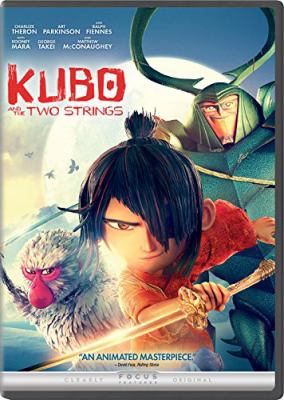
So opens the incredibly intense animated epic that is “Kubo and the Two Strings.” Hunted from birth by his grandfather and his demonic aunts, one-eyed Kubo — his right eye being the “something” his grandfather, the ominously named Moon King, stole from him — makes a frugal living for himself and his mother by performing stories with enchanted origami and his magical instrument, a shamisen. Kubo must return to his cave home tucked in a cliff high above the village where he performs before the sun sets and the moon rises each day-to-night, however, lest he be found by his aunts and grandfather, who seem to possess an otherworldly omniscience, both omnipotent and omnipresent as the night sky. Kubo’s mother cannot warn him enough about his relatives’ terrible power, especially because her own stability in mind and body is steadily deteriorating and fading away. Are the stories she tells him real stories, or memories, or dreams, or hallucinations, or past lives, or cautionary tales, or nightmares, or some nebulous mix of everything she has ever experienced? On the night of the Bon Festival, during which the villagers travel to a nearby river to honor and even speak with their deceased loved ones by means of lit paper lanterns, Kubo lingers too late, desperate for any word or sign from his father, whom he doesn’t remember much and who died protecting him from his grandfather. As the full moon rises over the extinguished paper lanterns floating down the river, two winged figures in sharp black hats and eerie masks singsong their way out of the darkness, violently altering the course of Kubo’s life once again and sending him on a quest to discover the truths of his existence.
Much like “Song of the Sea” (a previous Spooky, Not Scary™️recommendation), this film is a challenging watch, not exactly for its scariness — though the river scene with the aunts is definitely one of the scariest images I’ve ever encountered!!! 😱 — but for its harrowing exploration of grief. Instead of Irish mythology informing the worldbuilding, in Kubo, you experience the spectacularly layered landscapes and folklore of feudal Japan and its truly spine-chilling monsters.
🎃🎃🎃🎃-🎃🎃🎃🎃🎃/🎃🎃🎃🎃🎃 for bloodthirsty relatives, generational trauma, and the haunting, life-affirming, death-denying power of memory — which, when you think about it, is one kind of story. ❤️🔥 3/3 magical objects guarded by fearsome foes, including an underwater garden of eyes. 👀🌊👀🌊👀
Pride and Prejudice and Zombies
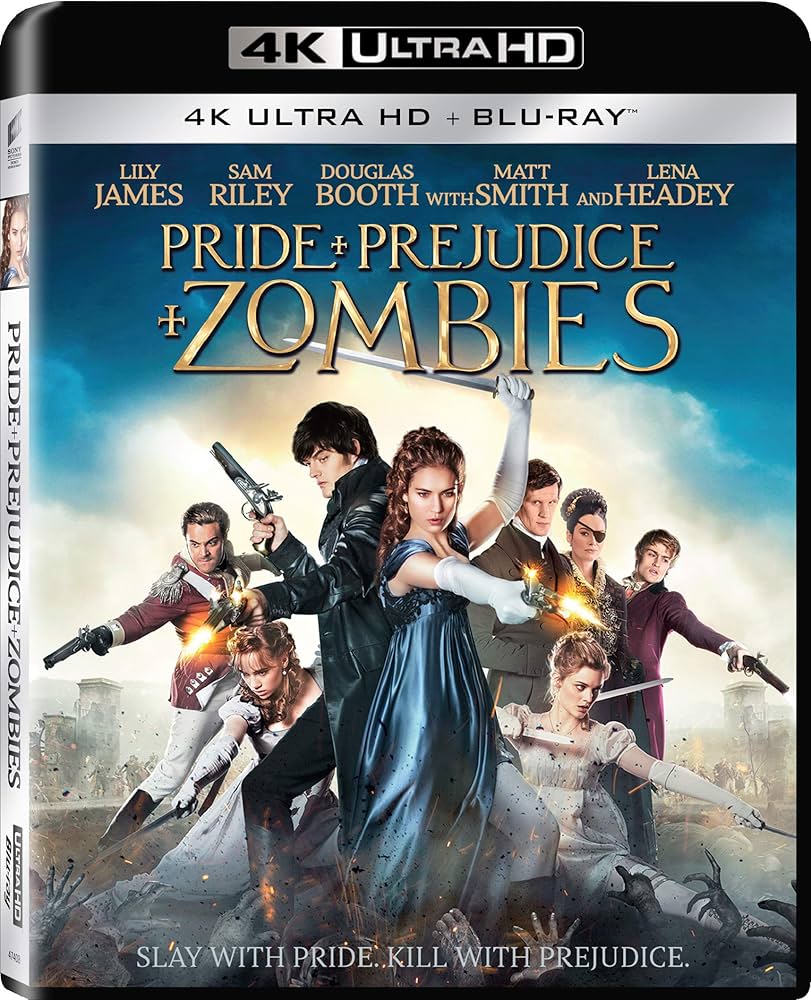
Is this a compelling adaptation of Jane Austen‘s “Pride and Prejudice,” finding new ways to comment on and critique human behavior as it intersects with capitalism and social customs? Not really, no. BUT is it a fresh, unique take on the zombie trope, reflecting back, through a decayed and decaying lens, how our fear of and yet fascination with the abject shapes our relationships both economically and emotionally? Also no. Should you watch this? Maybe, if what you’re looking for is something that is really quite ridiculous, but kind of acknowledges its nonsense as nonsense. After watching the trailer for this movie, I thought I might not actually be able to finish it, that it might indeed be too scary. I’m happy (?) — or at the very least Not Scared — to report the sheer audacity of the movie’s premise, paired with the movie’s total inability to execute this premise, made for a wonderful Spooky, Not Scary experience. Though I would, in future viewings, watch with a friend, if only to be able to turn to someone and say, “did they really just say/do that?” 🤪
🎃🎃🎃🎃🎃/🎃🎃🎃🎃🎃, mostly for all the blood and gore, which I will admit has been rather tastefully (🧟) done, the majority of it off-screen or via quick pan away, in order to achieve its PG-13 rating. 5/5 groans for just how bad the dialogue is — which might be its own strange flex, considering the screenwriters had multiple texts to pull from. 🤔