Literary Links: Visiting Mars
Posted on Friday, January 13, 2017 by Marida

Posted on Friday, January 13, 2017 by Marida
Posted on Wednesday, January 4, 2017 by Kirk
Here is a quick look at the most noteworthy nonfiction titles being released in January. Visit our catalog for a more extensive list.
TOP PICKS:
“The Lost City of the Monkey God” by Douglas Preston
Bestselling author Douglas Preston joins a team of scientists on an exciting and treacherous journey to the rain forests of Honduras in search of the ruins of a mysterious, ancient metropolis. Continue reading “Nonfiction Roundup: January 2017”
Posted on Monday, December 19, 2016 by Chris
It is understandable that the average American is pressed for time, what with all the vacation butlers take, and the various board meetings, galas and cocktail hours that beckon so vigorously. So, as you study the 12 recommendations this gentleman has made in 2016 searching for the one that is most worthy of your limited reading time, consider this a clue: The GENTLEMAN’S ULTIMATE RECOMMENDATION for 2016 is “The Nix” by Nathan Hill.
I’d like to write a few thousand considered and enthusiastic words about how great this novel is, but because I must prepare for a gala, I’m going to plagiarize myself from an article printed in last week’s Columbia Tribune and quote from the book. The quotes from the novel should be sufficient to persuade you that Nathan Hill has written a genius novel, and lazily plagiarizing myself should convince you that thoughts of the impending gala are thoroughly distracting me. Continue reading “The Gentleman Recommends: Nathan Hill”
Posted on Thursday, December 15, 2016 by Chris
The days are shorter, the air is colder and holiday stress threatens to overwhelm holiday cheer. Distractions that provoke laughter, or at least inward chuckles, are in order. A satirical novel (or two), could be just what you need to divert your attention from your heating bill and anything else that ails you.
“Infinite Jest” by David Foster Wallace (Little, Brown and Company, 1996) is encyclopedic in size and scope, and satire features heavily among the hundreds of ideas battling for attention in its thousand-plus pages. Years are no longer represented numerically, but by whichever corporation has secured their naming rights. Much of the novel’s events take place during the “Year of the Depend Adult Undergarment.” And while “Infinite Jest” may not have forecasted the reach of the internet, it did take time to satirize the pull of entertainments. Specifically via the cartridge known in the novel as “The Entertainment,” a video so fatally compelling that its viewers become unable to do anything but repeatedly view it. It can be a challenging book, but it’s also bursting with pleasures and heart. Continue reading “Literary Links: Satire”
Posted on Monday, December 12, 2016 by Marida
If life were fair, Shirley Jackson would have lived to a ripe old age and given us a dozen more books. Because life isn’t completely unfair, her influence lives on in the works of writers such as Neil Gaiman and Suzanne Collins. Jackson was born 100 years ago on December 14, 1916 and died unexpectedly of heart failure in 1965, at the age of 48. In that span of time, she managed to create a substantial collection of groundbreaking literature while simultaneously raising four children. All without a wife to help her.
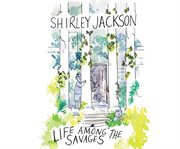 Her experience of family life led to two memoirs of the snort-your-coffee variety. “Life Among the Savages” and “Raising Demons” are the forerunners of Erma Bombeck’s books, only with more edge. They need to be read as products of their time, as all of the adults smoke and nobody wears a seat belt. But many of the issues she coped with will still resound with parents today: playing musical beds when the whole family is sick, sports equipment everywhere, dealing with the IRS. Continue reading “Classics for Everyone: Shirley Jackson”
Posted on Wednesday, December 7, 2016 by Katherine
Today, December 7, marks the 75th anniversary of the attack on Pearl Harbor and the entrance of the United States into World War II. With the popularity of “All the Light We Cannot See” by Anthony Doerr there has been an surge of interest in fiction about WWII. So, in memory of Pearl Harbor and all the lives lost during WWII, here are some books that deal with the horror and hope, and the fear and courage found in wartime.
“The German Girl” by Armando Lucas Correa
Berlin, Germany 1939. Nazi flags and emblems are draping the streets, and Berlin is becoming a dangerous place for Hannah Rosenthal and her family. Their home and possessions are taken away from them, but an escape route is offered via the SS St. Louis, an ocean liner that will carry fleeing Jews from Germany to Cuba. Even as they leave Berlin behind and begin to feel safe, tensions and rumors from Cuba once again cast a shadow of dread. Decades later, Anna Rosen receives a package from her unknown great-aunt Hannah that sends her and her mother on a quest to uncover their family’s past.
Continue reading “WWII Fiction for Fans of All the Light We Cannot See”
Posted on Monday, December 5, 2016 by Kirk
Here is a quick look at the most noteworthy nonfiction titles being released in December. Visit our catalog for a more extensive list.
TOP PICKS:
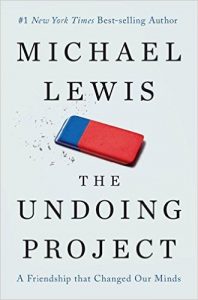 “The Undoing Project” by Michael Lewis
Perennial best-seller Lewis takes an in-depth look at the partnership between Daniel Kahneman and Amos Tversky, two Nobel Prize winning psychologists, whose work transformed our understanding of human thinking and decision making. Kahneman wrote the highly popular “Thinking, Fast and Slow.”
Posted on Friday, November 18, 2016 by Kat
It’s been a tough election season. No matter who you ended up supporting, I’m sure you are glad that we have four whole years before the next presidential election cycle. I know I’m exhausted from all the negativity, and I am looking forward to getting lost in something more comforting. Here are some cozy, feel-good books to cleanse your palate.
Imagine looking out into your yard and seeing a robot. This is the opening of “A Robot in the Garden” (Doubleday, 2015) by Deborah Install. Ben is good at failing, so when he sees a slightly broken little robot named Tang, he decides he’s going to try to fix him, and not fail for once. Alas, when he brings Tang home, Ben’s wife Amy deems it the last straw, and leaves. So he can add marriage to the list of things at which he fails. Ben and Tang set out together to get Tang fixed, and in the process Ben gets a little “fixed” too. This book is a funny, insightful look at humanity and coming into one’s own. And while Ben’s transformation is heartwarming, adorable Tang is the real star of this story. Continue reading “Literary Links: Heartwarming Reads”
Posted on Monday, November 14, 2016 by Chris
I suspect many readers may currently yearn for an escape to a land of magic and fictional monsters. Try “Lovecraft Country,” a novel by Matt Ruff.
“Lovecraft Country” is set during the Jim Crow era, and while its main characters endure racism that makes one long for the sort of monster that relieves one of one’s sanity with a single glance, they also (spoiler alert) get to experience triumphs. I lightly spoil because I want you to know this is a book with big-league heart, one that might pleasantly distract you from something that is currently troubling you. Previous recommendation Charlie Jane Anders says:
“It’s a heroic story that will have you pumping your fist. But it’s also an incredibly powerful portrayal of American racism—in which the entrenched oppression piles on, page after page, and meanwhile the secrets of a hidden world of monsters and power only add to the sense of—yes—eldridtch dread.”
Posted on Friday, November 11, 2016 by Kat
It is ever so satisfying to finish a book, but often I find myself so busy that it’s hard to dedicate the time to whatever I’m reading. This leads to one of two things: 1) I neglect my other responsibilities and read instead (my usual choice — who needs clean dishes?), or 2) I get super distracted by daydreaming about what is happening in my book and pine for the time when I get to pick it up again. Either way, all I want to do is read to the gratifying conclusion of the story. If you’re like me, I’m sure you know the feeling. Well friends, I have discovered a cure for our ailment: read a shorter book! I’m not suggesting that you do this all the time, but it’s especially handy when your schedule is full, and you need the mental relief that only a great story can give. Here is a selection of some shorter books at your disposal for when life gets hectic.
“The House on Mango Street” by Sandra Cisneros

An incredibly short (110 pages) coming-of-age story of Esperanza Cordero. The story is told in vignettes and centers on her growing up as a Latina in Chicago. This is often considered a classic (or well on its way to being one), and with it being so short, what have you got to lose? Continue reading “Weekend Reads: Short Books to Devour Quickly”