
A random find on a library shelf can draw you in and show you wonders, or it can send you down an incredible research path. In this instance, I learned just how gullible people can be.
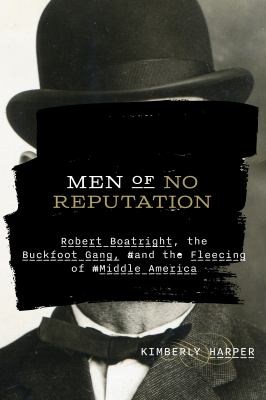 While researching foodways of Missouri, I came across Kimberly Harper’s book “Men of No Reputation: Robert Boatright, the Buckfoot Gang, and the Fleecing of the Middle West.” The author is an editor at the Missouri Historical Review at the State Historical Society of Missouri. Working primarily in Jasper County and extending throughout the midwest, Robert Boatright is considered one of the greatest confidence men of the early 20th century. He and the Buckfoot Gang, working with a local bank and an influential Democratic leader, fleeced possibly millions of dollars from their victims in the late 1800s and early 1900s. Harper says, “While it would be easy to romanticize their exploits, Boatright and Mabray were criminals who wrecked people’s lives. They capitalized on technological innovations – the railroad, the telegraph, the telephone — to further their schemes.”
A fascinating book, in my personal opinion. As I read, I was surprised to learn that these men would come into a town like Joplin, scam people with a rigged foot race or fight, skip out of town in the nick of time… and then come back and do it again! I know people didn’t have social media then, but they had newspapers. And I would guess that the victims probably all had social and business connections. Of course, when you want to be convinced that a get-rich-quick opportunity is real, you will be. Just as I am easily convinced that, yes, I will do something with all the craft items in my workroom, and, yes, I will someday finish all of my projects.
Speaking of social media, I might have found the origin story for the Nigerian prince email scam. It may be as old as Elizabethan England! Yapoka Yeebo wrote “Anansi’s Gold: The Man Who Looted the West, Outfoxed Washington, and Swindled the World,” a history of the 20th century con man John Ackah Blay-Miezah. He declared himself the custodian of an alleged Nkrumah trust fund, the Oman Ghana Trust Fund, supposedly worth billions of dollars. He needed money to access those funds and promised ten times the return to any investor. Between the 1960s to 1980s, he stole over 200 million dollars. In telling Blay-Miezah’s story, Yeebo also relates earlier scams involving Sir Francis Drake’s fortune, built up from ‘robbing the robbers’ on the high seas on behalf of the young Queen Elizabeth. For a small investment, victims were usually promised, you guessed it, ten times the return!
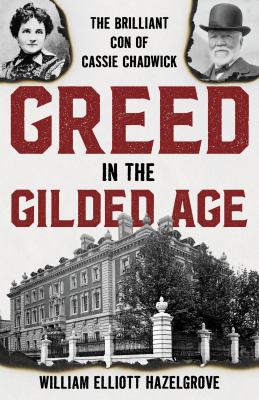 In “Greed in the Gilded Age: The Brilliant Con of Cassie Chadwick,” author William Elliot Hazelgrove introduces us to Cassie Chadwick, born Elizabeth Bigley, who wrote bad promissory notes, ran a brothel and married for money. In 1897 New York, she tricked people into believing she was an illegitimate child of Andrew Carnegie, saying he had given her millions of dollars of guilt money and promised more at his death. She took out loan after loan backed by this lie, which fell apart in 1904. She died in prison in 1907.
Absinthe became illegal in many countries just before World War I, making pre-war bottles worth $3,000-5,000 today. This introduces the central hoax of “The Absinthe Forger: A True Story of Deception, Betrayal, and the World’s Most Dangerous Spirit” by Evan Rail. The author worked with international collectors to pull together the story of ‘Christian,’ a forger who located unused bottles, developed his own recipes and bought authentic labels to fleece people out of their money and of their trust in pre-ban bottles. Other absinthe collections also dropped in value for a time, but as Rail suggests, “people wanted to believe that something magical from the past could enter and influence our world today.”
Leonard Glenn Francis was a defense contractor who wined and dined Naval officers, providing lavish parties, prostitutes and endless good times. In exchange, he demanded preferential contracts, money and information. Much of his power came through blackmail and by corrupting naval officers. The discovery of this corruption started in 2006 and 33 individuals were eventually charged. Cases are still ongoing; 22 had pleaded guilty as of the publication, in May, 2024, of “Fat Leonard: How One Man Bribed, Bilked, and Seduced the U.S. Navy” by Craig Whitlock. This is a well-written tale with extensive footnotes.
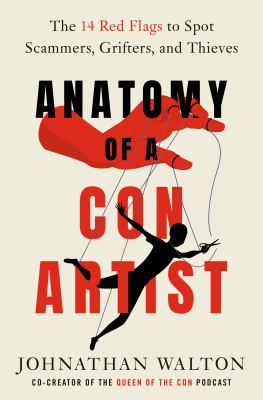 These are stories of big cons targeting wealthy people with layers of protection around them. You and I are more apt to be taken in by smaller but still devastating scams. Jonathan Walton investigated hundreds of cases of such scams by crooks who stole money, property and more from ordinary people. “Anatomy of a Con Artist: The 14 Red Flags to Spot Scammers, Grifters, and Thieves” discusses these grifters and thieves through stories of his own and others’ experiences. Walton explains how to prepare yourself for reporting scams to the police, how to gather information and do background checks.
If someone approaches you with sweet deals promising money, or protection for your money or home or health, they might be trying to take advantage of you. Be careful! And use your library resources to learn how to protect yourself.