
“After about two months of the war, I decided to do something normal, ordinary, necessary. I took my 8-year-old daughter for a haircut,” journalist Maram Humaid wrote in October 2024 for Al Jazeera, recounting her first year reporting the war on Gaza. Visiting with Najla the hairdresser, Humaid is moved by her generosity in sharing stories that Najla’s clients have shared. These “side-stories” are in some ways at odds with the pressing priorities of Humaid’s journalism.
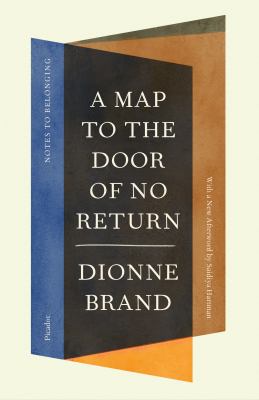 The necessity Humaid discovers in these ordinary stories speaks to alternative ways of grasping the flow of events or “sitting in the room with history,” as Dionne Brand put it in “A Map to the Door of No Return.”
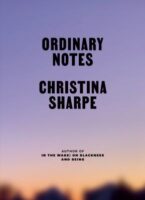 In Christina Sharpe’s “Ordinary Notes,” history and Black life meet, every day, “in the wake” of chattel slavery. In this essay collection, Sharpe studies Toni Morrison’s fiction; a lynching victims’ memorial in Montgomery; the symmetries her mother’s hands made that, altogether, reverberate truths. Against the ordinary ‘notes’ or beats of anti-black racism, Sharpe finds currents that give Black lives more breathing room. Beauty as a practice, for example, she credits to her mother, Ida. Beauty, an “attentiveness” that helped Sharpe “limit my sight to things that could be controlled,” offers “space to dream” in uninterrupted reading periods that her mother protected.
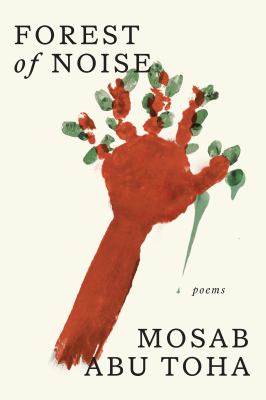 Another moment of beauty Sharpe notes is her community’s support when a white resident calls 9-1-1 on her brother’s friend, sending her neighbors “running after the police.” In Mosab Abu Toha’s second book, “Forest of Noise,” written in part during the Gaza war, a poem on carrying a little girl to a hospital, ends: “You are alive / for a moment, / when living people / run after you.” Suffused with heartbreak and care, “Forest of Noise” remembers the lives of the dead, many killed in the war, and the survivors’ ruptured lives. When bearing loss so immense, dreams help one reconnect, as when the poet’s deceased younger brother returns “like a blank postcard,” and memories soothe, as in the stories Abu Toha’s daughter retells him by request, “… to watch her face relive the moment.” Candid words let the survivors’ care for the deceased show through.
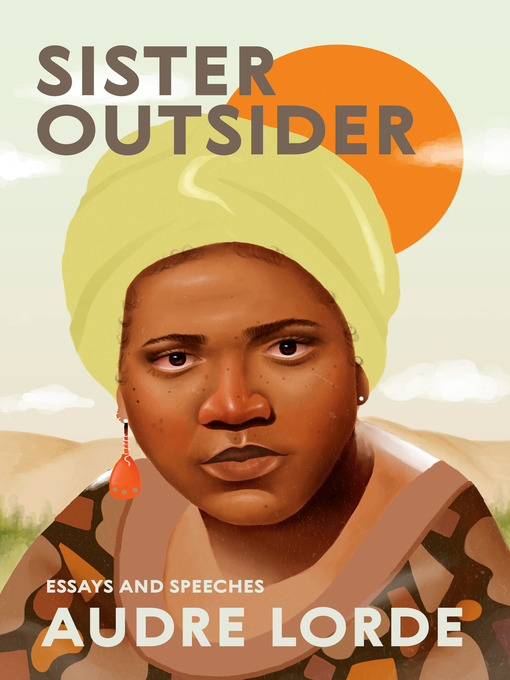 In February 2024, Abu Toha posted on Instagram a photo of books a brother sent from the rubble of the poet’s home. Among the titles is a collection by Audre Lorde. Abu Toha laments the lack of food on the shelves. Lorde herself, in “Sister Outsider,” wrote, “Our children cannot dream unless they live, they cannot live unless they are nourished …” A collection of quick talks and essays, “Sister Outsider” maps Lorde’s travels and the writers/readers she aligns with such as a speech on her changed view of silence after a cancer scare and her pursuit of cultural questions in Soviet Russia. Lorde’s commitment to language as a spark to action recurs throughout — her lament on children’s nourishment is a demand for food justice and art that feeds young imaginations and a health scare inspires a refutation of silence and a call for coalition.
 In her picture book “Love in the Library,” author Maggie Tokuda-Hall shows how language opens possibilities under confinement for her grandmother Tama in a concentration camp during World War II. Displaced by the U.S.’s imprisonment of citizens of Japanese ancestry, Tama’s days in the Minidoka library ebb and flow with those of her patrons. “But most days were the same,” Tama says. “Constant questions. Constant worries. Constant fear.” Illustrator Yas Imamura’s watercolor art conveys the stress in the air and the connections people form despite it. Tama draws strength from words in books and from a daily patron, George. In a moment between her and George, when Tama tries to return his smile, she sighs, straining to name this feeling. George offers her a word: “Human.”
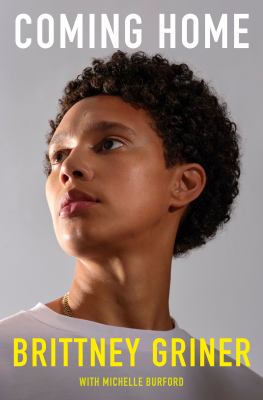 “When you’re caught between before and a month of tomorrows, your eyes won’t close,” WNBA All-Star Brittney Griner writes with Michelle Burford in Griner’s “Coming Home.” Facing a nine-year sentence in Russia for prescription cannabis customs officials found in her bags, Griner fills restless hours in her cell with sudoku, scribbling herself notes in the margins. Griner played in Russia often enough to rent a local apartment, drawn by higher compensation for WNBA teams compared to the U.S. After the arrest, her legal team and wife, Relle, are optimistic for a quick release, but with Russia’s subsequent invasion of Ukraine, and her first hearing going badly, Griner’s faith buckles. Fierce support in a letter from Relle revived her for the time being. “It was Relle’s strength that I borrowed when mine ran out.”
If, as Brand says, history is in the room, these books show how to live with it.