
The Holocaust was so horrible, why would we ever want to read a story about it? Why, in fact would we want to read about any genocide? There are so many valid answers to that question.
I was privileged to be able to visit the Dachau Concentration Camp Memorial and Museum when I was in my twenties, which allowed me to imagine being in the shoes of those who passed through that nightmare. But not everyone has that luxury.
At Dachau, there’s a startling memorial sculpture that depicts the stacked bodies of prisoners as designed by Jewish artist Nandor Glid, who was persecuted by the Nazis in his home country of Yugoslavia. A path leads to a tomb containing the ashes of a prisoner with the inscription, “Never Again.” When I was there, I felt those words deep in my being.
But if you can’t visit a memorial site, the easiest way to walk in those shoes and have that feeling is through fiction. We read fiction to gain empathy, face and process traumas, receive understanding from all perspectives, learn how to move forward, reconcile, do better and never forget. Here are some stories that will help in that journey.
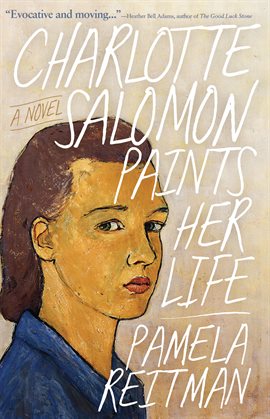 Based on the true life events of Charlotte Salomon, a young German-Jewish art student at The Berlin Art Academy during Hitler’s rise to power, “Charlotte Salomon Paints Her Life” by Pamela Reitman allows you to view the world through the artist’s eyes as her first place prize is denied and she is forced out of school. After Kristallnacht, she and her family flee Berlin for France and end up facing occupation. She learns a dark family secret, of mental illness in the women of her family, but she’s determined to use her art to survive both the specter of insanity and the war.
 It wasn’t just the Jewish community that was targeted by Hitler. The LGBT community was also heavily targeted early on. “The Lilac People” by Milo Todd tells about a thriving community in Berlin surrounding the Institute of Sexual Science located there. The story follows Bertie as he navigates life as a trans man in both pre- and postwar Germany. He and his friends protest, jump through hoops for documentation and healthcare, struggle to find work and, eventually, try to escape.
 Although the term “genocide” wasn’t coined until the 1940s, the act has been with us throughout time. It has been said that Hitler used the United States policies that systematically set out to destroy the Native American nations as a model. “Creek Mary’s Blood” by Dee Brown gives an intimate look at those policies through the eyes of Creek Mary and her family who, bit by bit, lose their land, traditions and lives as they are forced to migrate and resettle in the Oklahoma Territory reservations by way of the Trail of Tears.
 There have been many more genocides since the Holocaust. Dave Eggers’s book , “What Is the What?” is the fictionalized autobiography of Valentino Achak Deng (a real person) who illuminates the millions of “lost boys” of Sudan. At the age of seven, Deng was forced to walk hundreds of miles from his home in Darfur while hiding from militias and wild animals, and yet he never lost his compassion or sensitivity. Eggers beautifully weaves Valentino’s story going back and forth between his time in Africa and his new life in Atlanta.
 The Rwandan genocide was fast and brutal, occurring between April 7 and July 19, 1994. In the book “Small Country” by Gaël Faye, we see it told through the eyes of Gabriel, a 10-year-old boy who lives a privileged life with his French father and Rwandan mother, but even he is not unaffected by the surrounding violence. One of the standout quotes from the book is, “Genocide is an oil slick: those who don’t drown in it are polluted for life.”
The Columbia Public Library has the honor of hosting a traveling exhibit, Americans and the Holocaust, February 9 through March 16 in the third floor Quiet Reading Room. This thought-provoking exhibit is sponsored by the United States Holocaust Memorial Museum and the American Library Association. There will be guided tours as well as other programming surrounding the exhibit. And if you would like to read more stories about the Holocaust or other genocides, you can check out this list.
May we all find peace and remember the words, “Never Again.”
Image credit: Marcia Stubbeman, Dachau Concentration Camp, Dachau, Germany via Wikimedia Commons (license)