I’m excited to share some of the new books hitting our shelves in June. We have a humorous sci-fi, some historical fiction and even a tale about someone who tries to ban books. Check out these LibraryReads favorites from library staff across the country:
“Sandwich” by Catherine Newman
This story focuses on Rocky, a woman filled with menopausal rage and immense love for her family. The witty banter and poignant musings will have readers laughing hysterically while mopping up tears a few pages later. This is a no-brainer for fans of Ann Patchett and those who enjoy a good family drama. Perfect for women’s book discussion groups.
~Robin Beerbower, LibraryReads Ambassador, AZ Continue reading “June 2024 LibraryReads”
I can’t help but judge a book by its title, and when it straight up tells me that it’s lying I am almost guaranteed to find my interest piqued. Will I be able to sort out the lies from the truths? Or will the author be able to pull the wool over my eyes? Here are a few titles that aren’t afraid to admit they contain some untruths and that ended up being a whole lot of fun to read!
 Author Amy Tintera jumped on the “use a podcast to tell your story” bandwagon with her novel, “Listen for the Lie,” and I’m glad she did. The story follows Lucy, who left her small Texas town after her best friend Savvy’s murder, which she may have committed. She just can’t remember. After years of living with the unknown, a new podcast threatens to unearth the truth and she decides she has to find it first. The story offers a solid mystery, but the addition of the podcast is a lot of fun. I especially enjoyed the “voices” of Lucy and her granny — they both exude wit and are quite snarky, which made for some surprising laughs in this thriller. Continue reading “Stories that Lie”
Welcome back to my Read Harder Challenge! In case you missed the beginning of this series, check out my first blog post where I explain what the Read Harder Challenge is. We’re halfway through the year and halfway through the challenge!
Task 16 – Read a book based solely on the title
Book Read: “She Who Became the Sun” by Shelley Parker-Chan
I have to be honest, I didn’t choose this book solely based on the title. I had been considering reading it for years, and when I saw it was on one of our Read Harder lists, well it was fate! And hoo boy, there is so much discussion about fate in this book. As George Michael could have sung, “Zhu got have fate, fate, fate.” It follows the story of a young girl who denies the nothing fate given to her, and instead takes up her brother’s fate of greatness after he dies, taking on his identity and entering the monastery as a novice monk. “She Who Became the Sun” is an alternate history/historical fiction that had “Fantasy?” on the outline when it was being written, and it was never followed up on. Continue reading “Reading Harder in 2024! – Part 3”
by Kat Stone Underwood and Lauren Williams, One Read co-chairs
Charlotte McConaghy’s “Migrations,” our community’s 2024 One Read selection, follows environmentalist Franny Stone as she tracks the world’s last flock of Arctic terns on what might be its final flight. This work of climate change fiction narrowly beat out the delightful coming-of-age novel “The Chinese Groove” by Kathryn Ma in a public vote. This year our reading panel considered an extremely varied list of finalist books, all nominated by community members. Some titles address timely topics like racism and immigration and others provide escape with unlikely road trips and oddball whodunits. Get ready to add to your to-be-read list!
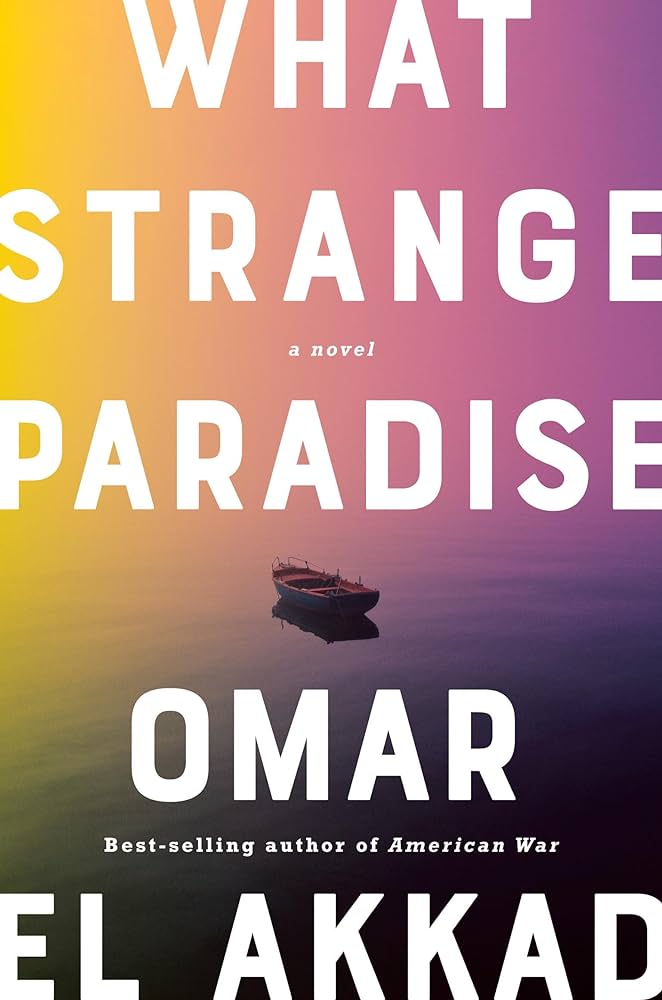
First up is “What Strange Paradise” by Omar El Akkad. We meet Syrian 9-year-old Amir when the migrant vessel he is on wrecks against the shore of a small island. The only survivor, Amir is luckily rescued by a local teenage girl named Vanna. Despite neither of them speaking the other’s language, Vanna is determined to help Amir. The tale alternates between the pair’s attempt to escape the authorities and the story of how Amir came to be on the ship. Continue reading “Literary Links: One Read Finalists 2024”
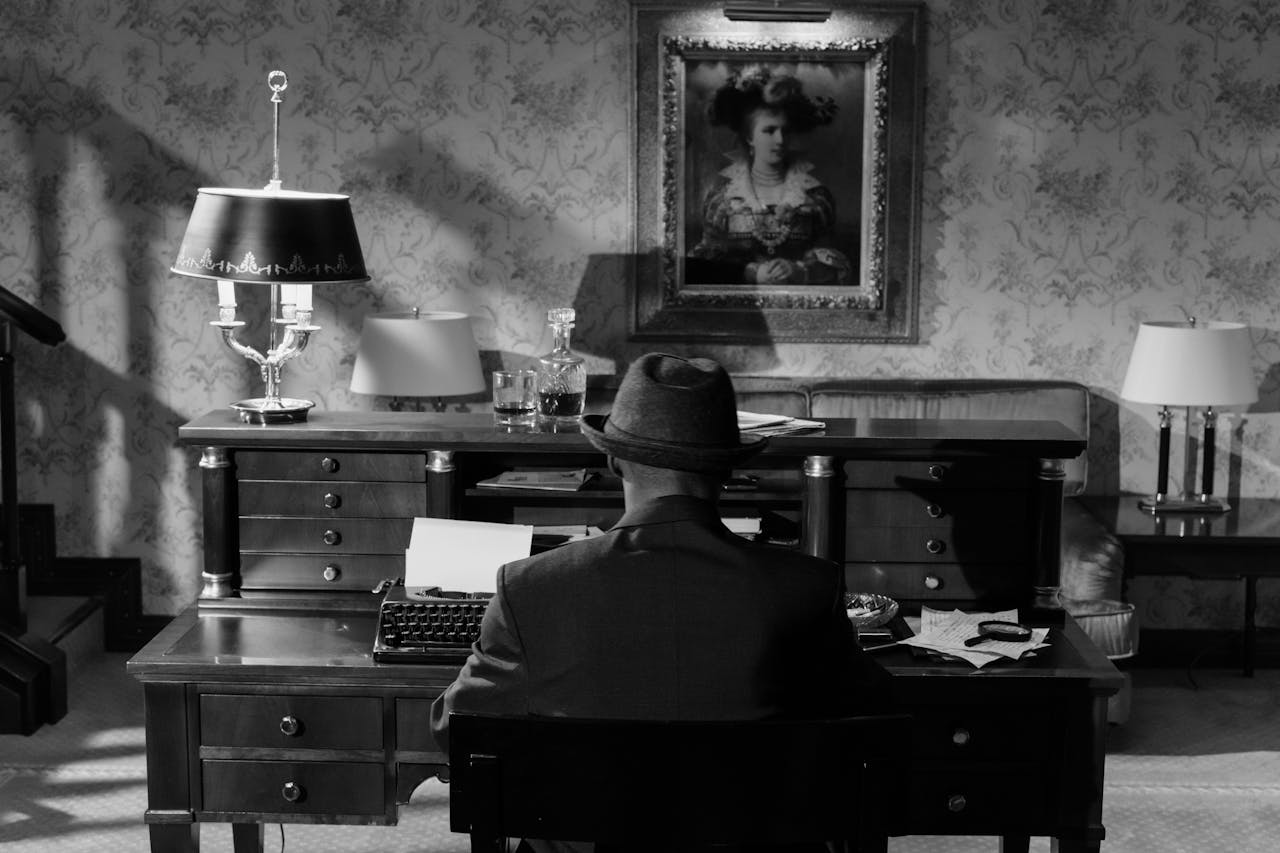
INTERIOR, OFFICE – NIGHT
THE DETECTIVE lounges behind his desk. A ceiling fan turns slowly, throwing dramatic and genre-appropriate shadows across the room. THE CLIENT sits across, pleading their (literal) case.
THE CLIENT:
-and that’s why you have to help me, mister! I’ve got no one else to turn to!
THE DETECTIVE (INTERNAL MONOLOGUE, interrupting):
I knew this case was going to be trouble from the start. That’s why I had to make sure I was prepared.
THE DETECTIVE pulls open a drawer on their desk, expecting to pull out their revolver, but hesitates. Instead, they are presented with a magic wand and a ray gun within. A confused beat passes.
THE DETECTIVE, looking straight into the camera:
Is this some sort of joke?
*
But enough about my meta-narrative spec-script that definitely exists outside of a bit setting up the premise of this blog. Continue reading “Castle Noir & Cyber-Pulp: Detectives of Sci-Fi and Fantasy”
Below I’m highlighting some nonfiction books coming out in June. All of the mentioned titles are available to put on hold in our catalog and will also be made available via the library’s Overdrive website on the day of publication in eBook and downloadable audiobook format (as available). For a more extensive list of new nonfiction books coming out this month, check our online catalog.
Top Picks
 “When Women Ran Fifth Avenue: Glamour and Power at the Dawn of American Fashion” by Julie Satow (Jun 4)
The 20th century American department store: a palace of consumption where every wish could be met under one roof — afternoon tea, a stroll through the latest fashions, a wedding (or funeral) planned. It was a place where women, shopper and shopgirl alike, could stake out a newfound independence. Whether in New York or Chicago or on Main Street, USA, men owned the buildings, but inside, women ruled. In this hothouse atmosphere, three women rose to the top. In the 1930s, Hortense Odlum of Bonwit Teller came to her husband’s department store as a housewife tasked with attracting more shoppers like herself, and wound up running the company. Dorothy Shaver of Lord & Taylor championed American designers during World War II — before which US fashions were almost exclusively Parisian copies — becoming the first businesswoman to earn a $1 million salary. And in the 1960s Geraldine Stutz of Henri Bendel re-invented the look of the modern department store. With a preternatural sense for trends, she inspired a devoted following of ultra-chic shoppers as well as decades of copycats. In “When Women Ran Fifth Avenue,” journalist Julie Satow draws back the curtain on three visionaries who took great risks, forging new paths for the women who followed in their footsteps. This stylish account, rich with personal drama and trade secrets, captures the department store in all its glitz, decadence, and fun, and showcases the women who made that beautifully curated world go round. Continue reading “Nonfiction Roundup: June 2024”
I may not have finished these books (or these), but I got far enough to know that they’ll be worth the read! Sometimes, reading is a project that you see through to completion. And sometimes, reading is a buffet, or a garden: That looks good! That seems interesting! I want to try it. I wonder how this one tastes, compared to that one — I wonder what would happen if we put them together! I want to leave a little bit of this one here, for the next person to enjoy. I can’t wait to try this again, when I’m ready.
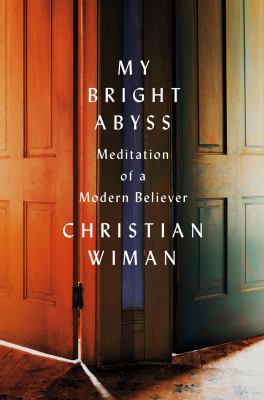
“My Bright Abyss: Meditations of a Modern Believer” by Christian Wiman
Why I checked it out: I had recently read some excellent Buddhist memoirs, and decided to explore Christian memoirs next. This book by Christian Wiman was recommended to me by a dear friend, who described it as “careful, sincere and humble” — three qualities I value in nonfiction writing.
Wiman is a poet, and he writes like one, even in prose. “My Bright Abyss” is no treatise — the writing is tangled and honest. Have a taste: “It God is a salve applied to unbearable psychic wounds, or a dream figure conjured out of memory and mortal terror, or an escape from a life that has become either too appalling or too banal to bear, then I have to admit: it is not working for me.” Continue reading “Great Books I’ve Started II”
“In the beginning, the Universe was created. This has made a lot of people very angry and been widely regarded as a bad move.” So begins not Douglas Adams’ seminal work, “The Hitchhiker’s Guide to the Galaxy”, but its sequel, “The Restaurant at the End of the Universe.” Hard to find a better opening line for this blog post though, you have to admit. This year marks 45 years of “Hitchhiker’s,” if you believe in things such as time being a straight line constantly moving forward. In honor of the anniversary, as well as Towel Day on May 25 (a day dedicated to honoring Adams’ life), I thought it would be a good opportunity to reflect on the legacy of “Hitchhiker’s” all these years later. Continue reading “So Long and Thanks For All the Fish”
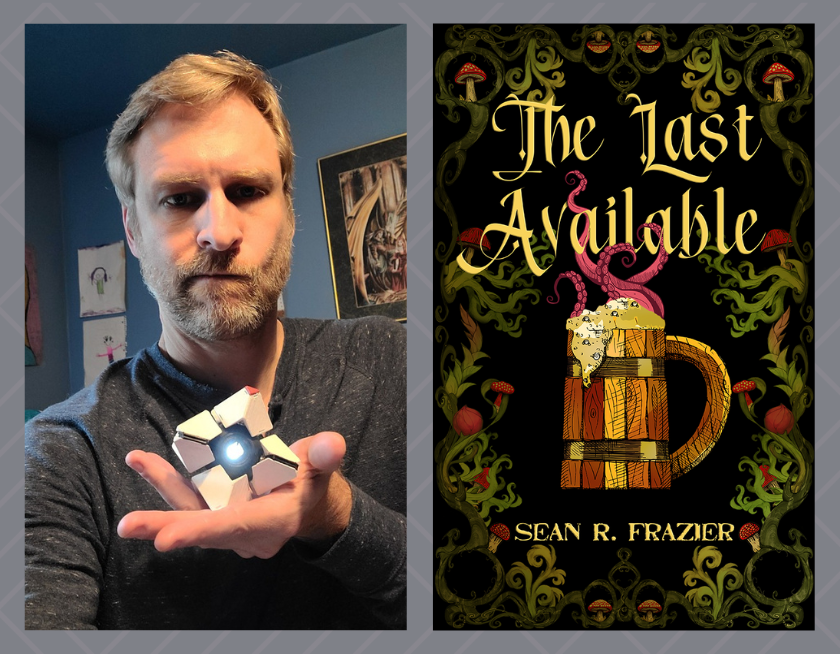
Sean R. Frazier is a Columbia, MO author whose latest book is “The Last Available.” This stand alone comedic fantasy novel follows the bumbling adventures of six unlikely heroes as they attempt to quest their way into defeating an ancient creature that has awakened. Frazier is a father, a husband, a gamer, a runner and a total dork. His other work includes two fantasy book series, the completed Forgotten Years Saga and the newly started Mage Breaker Saga. He was kind enough to take the time to be interviewed via email. Continue reading “Q&A With Sean R. Frazier, Author of “The Last Available””
 June’s First Thursday Book Discussion title, “Hollywood Con Queen” by Scott C. Johnson couldn’t get a more apt tag line its tag line “The Hunt for an Evil Genius.” The story starts when a private security consultant first comes across a corner of the “Con Queen’s” web of deception and follows a years long hunt to understand and uncover the con. Johnson’s writing stands out in answering all the questions, peering into all the crannies, including the criminal’s childhood and medical history in an effort to answer, “why?”
Maybe some of us are noble enough not to ‘rubberneck’ at the roadside accident, but I’m not, and traffic studies repeatedly show that most people can’t resist this particular type of temptation. I like to think our fascination with misfortune comes from a some basic human drive to understand danger with the hope of avoiding it yourself.
While there is no shame in reading Johnson’s book as a well-written and compelling curiosity on its own, it can also be viewed a vital cautionary tale and a study in vulnerabilities unique to our time — mostly the false sense of intimacy that can be fostered through technology without proximity.
I’m sure there will be no shortage of topics to discuss at the program in the Columbia Public Library at noon on June 6! Please join us!

 I’m excited to share some of the new books hitting our shelves in June. We have a humorous sci-fi, some historical fiction and even a tale about someone who tries to ban books. Check out these LibraryReads favorites from library staff across the country:
 “Sandwich” by Catherine Newman