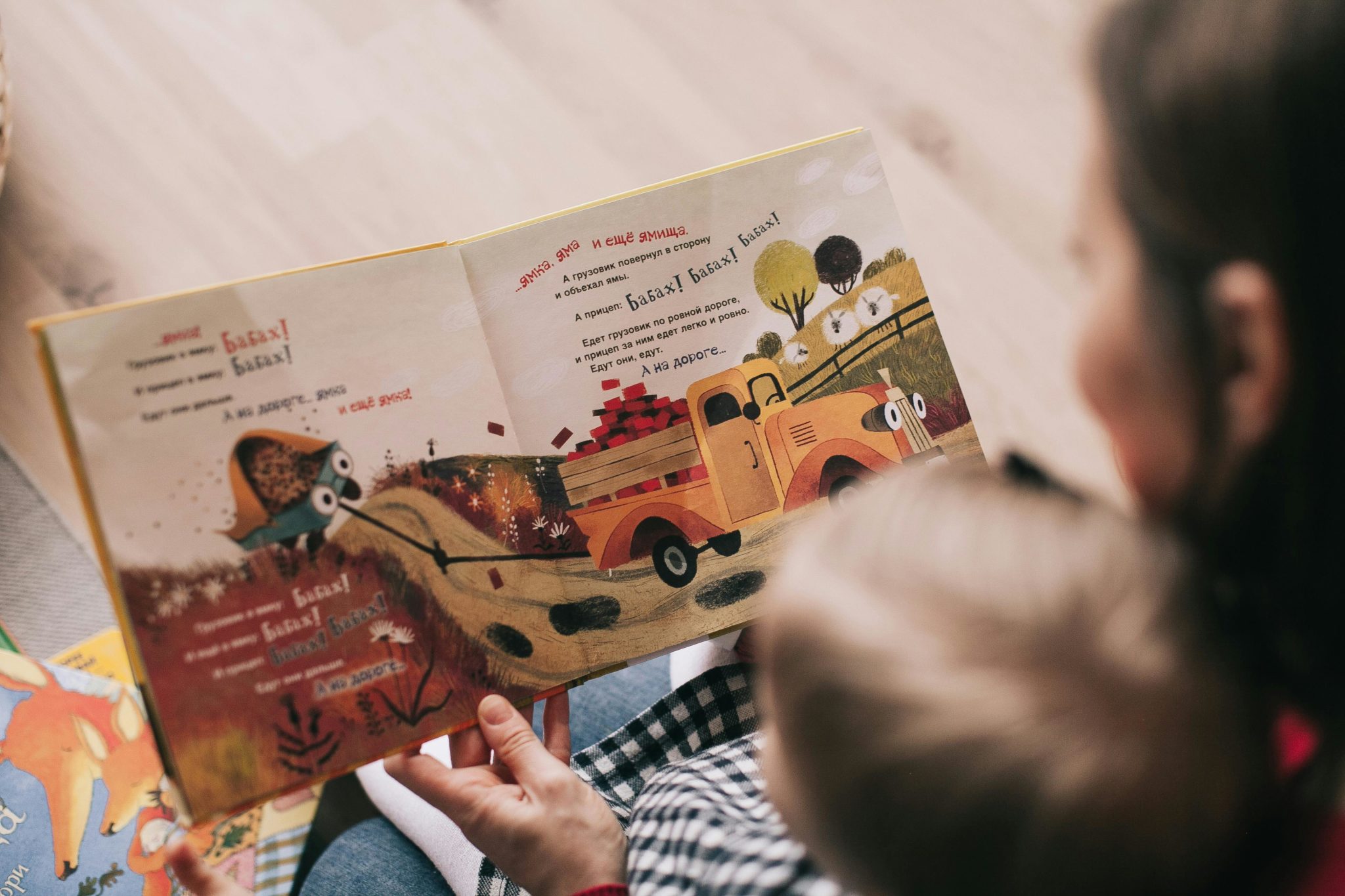
It can be so incredibly overwhelming when you learn your child might have dyslexia. So many questions could pop up all at once. Will they ever learn how to read? What can I do to help? Are there any resources to help me? Luckily, we have answers to many of those possibly scary questions. You aren’t alone in trying to figure this out. Dyslexia is not a sign that a person will never read. It just means they may need a little extra support as they learn how to work with their brain. Remember, as with most things, stay informed and you’ll soon see just how capable your kid really is. Keep reading for an overview of some of the current best research-based practices and how the library can help. Continue reading “Helping Kids With Dyslexia: Resources, Tips and Tricks”
March 19 marked the first day of spring, and with it, the turn of a season. While warmer weather and longer daylight hours are much appreciated features of the new season, my favorite aspect is the emergence of spring wildflowers. After a long winter, seeing the pops of color makes me feel like Earth is waking up, sparking inspiration and excitement.
In this post, I’ve compiled a small collection of my favorite native wildflowers that can be found in April, a little information about why they’re so cool, and some insight into where you might find them. You can treat this blog post as a scavenger hunt, with the objective of learning a little bit more about Missouri’s natural heritage.
While out on your hunt, I highly recommend this resource from the Missouri Department of Conservation, which is a helpful guide that covers spring wildflowers. If you find any plants you’d like to identify that aren’t on this list, you’ll likely find the answers in that guide.
Wildflowers to Look Out for:
Toadshade
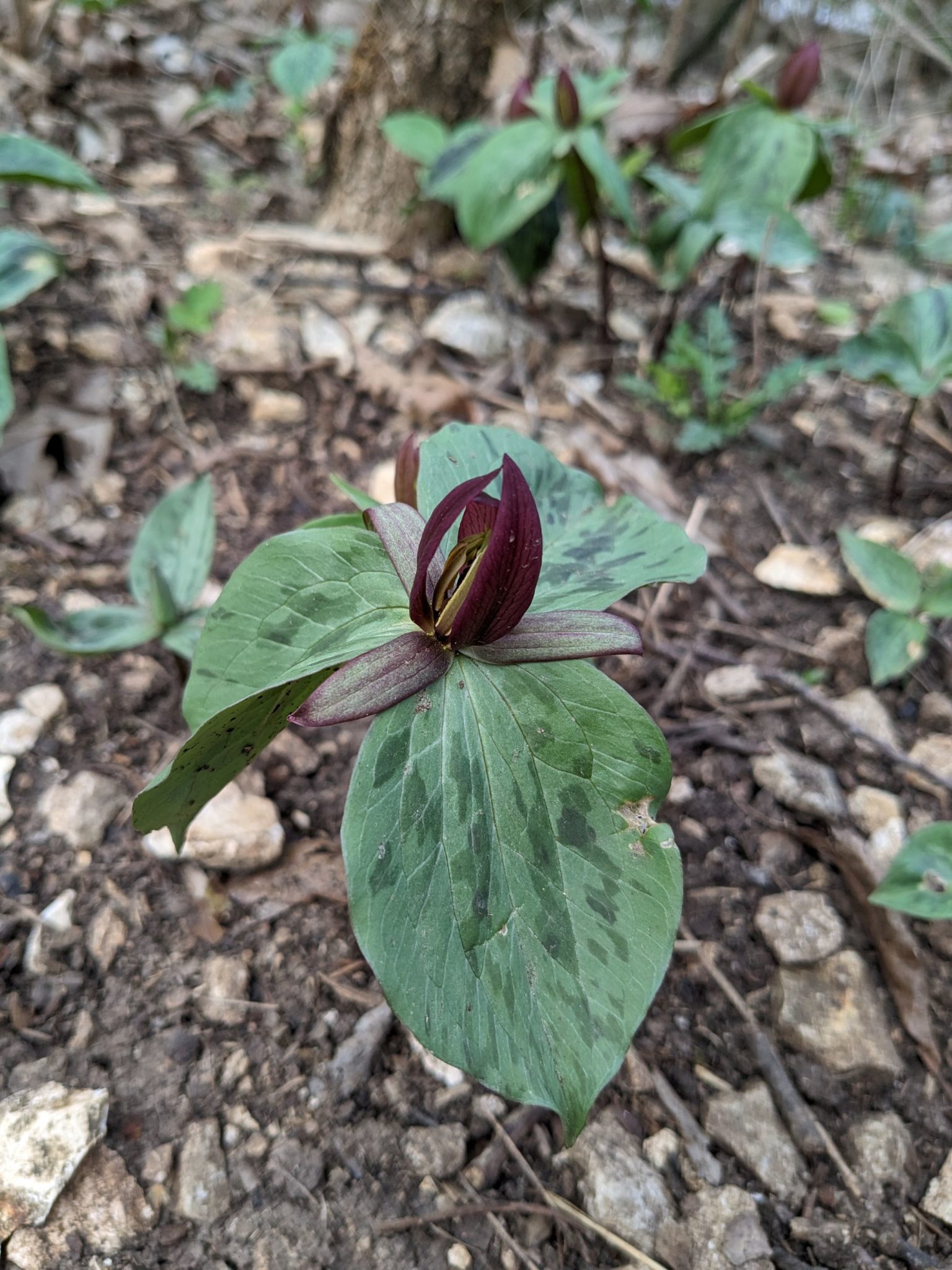
First on the list is an interesting-looking plant, the toadshade (scientific name, Trillium sessile).
Unlike many plants, which produce bright, sweet-smelling flowers to attract pollinators, this plant takes a different approach. Toadshade is pollinated by bugs that typically prefer dead or rotting things, like flies and beetles, and therefore, has a rather fetid smell.
If you can get past the smell, seeing this plant growing on the forest floor can be exciting. The leaves are arranged in the shape of a palm, satisfyingly symmetrical, and the single flower is long and dark. As the name implies, it looks like an umbrella made perfectly for a toad to relax under.
Publishing is really picking up for the spring. I’ve got all kinds of new books on order that I don’t have time to tell you about! These four all come out at the beginning of the month, so you won’t have to wait too long for them.
Picture Books
“Ahoy!” written and illustrated by Sophie Blackall
This is a fantastic example of imaginative play. A parent is trying to vacuum a large blue rug while their child plays nearby, gathering all sorts of household items. When the parent asks what they’re playing, the child responds, “I’M NOT PLAYING! I’M PREPARING TO SET SAIL!” They’re shouting because a storm is coming, and the child urgently convinces the parent to join them on their ship. Soon the blue rug is an ocean, paper towel tubes are telescopes, and the two embark on adventures on the high seas. The author perfectly balances fantasy and reality in the illustrations, while capturing the enthusiasm and joy of the child — not to mention their impressive nautical knowledge. I love that the parent is included in the adventure. My toddler is already teaching me so much about imagination that I’d forgotten as I grew up. He’s generally pretending to be a peregrine falcon or an ostrich (the faster the better!), but I have no doubt that we’ll be hoisting our own living room sails in a year or two. Continue reading “Brianna’s Books: April Favorites 2024”
When I’m not answering questions and handing out stickers at the Children’s Services Desk, I moonlight as an ESL (English as a second language) instructor at the University of Missouri. So it will come as no surprise that I love to help library kids and their families on their language learning journeys!
When I chat with parents and caregivers about this topic, I often hear questions like:
Will my child get confused if we introduce another language?
How can we balance English and another language in our home?
How do I raise a bilingual child when I’m not fluent in another language myself?
How can I get my child excited about learning a new language?
This is the perfect book for train and nature enthusiasts alike! Readers are invited to board the (apparently iconic) Alaska Train, as it races, rumbles, rattles and rambles its way through Alaska. Each new page turn features an Alaskan animal, with engaging rhyming text that will encourage little ones to guess the animal before the reader states it. The animals surreptitiously join the passengers on the train as it travels through various landscapes and habitats. Finally, the train is stalled at the foot of a tall mountain, and the animals all get off the train to help push it up the tracks. While the plot isn’t a main focus here, little ones will love seeing all the different types of animals, and the excellent rhythm of the text keeps things moving briskly. My toddler currently loves trains and animals, so I’m looking forward to sharing this one with him! Continue reading “Brianna’s Books: March Favorites 2024”
Do you have a budding mushroom and/or fungi lover in your life? You’re not alone; there is definitely something sporing in the air and plenty of fungus among us. Okay, that might be enough puns for now, but it does seem like the mushroom has been popping up everywhere lately, from cuteaccessories to interior décor to critically-acclaimed documentaries to your very own backyard or favorite spot of Missouri greenspace. I like to think the mushroom’s trendiness is due to the fact that there’s a little something for everyone in the fungi kingdom. Fungi are, after all, neither plant nor animal, but some other creature in-between or beyond. Plus, the technicolor spread of variety amongst fungi makes mushrooms, which are technically the fruit or fruiting body of a fungus, both adorable and endlessly fascinating —as well as in some cases, appetizing!
So, if you have gotten thoroughly tangled up in the mycelium (root-like structures of a fungus), or are just starting to sprout interest in the subject, I’ve compiled a list of resources for the aspiring mycologist (a.k.a. mushroom scientist). Read on for some cap-tivating choices. . .
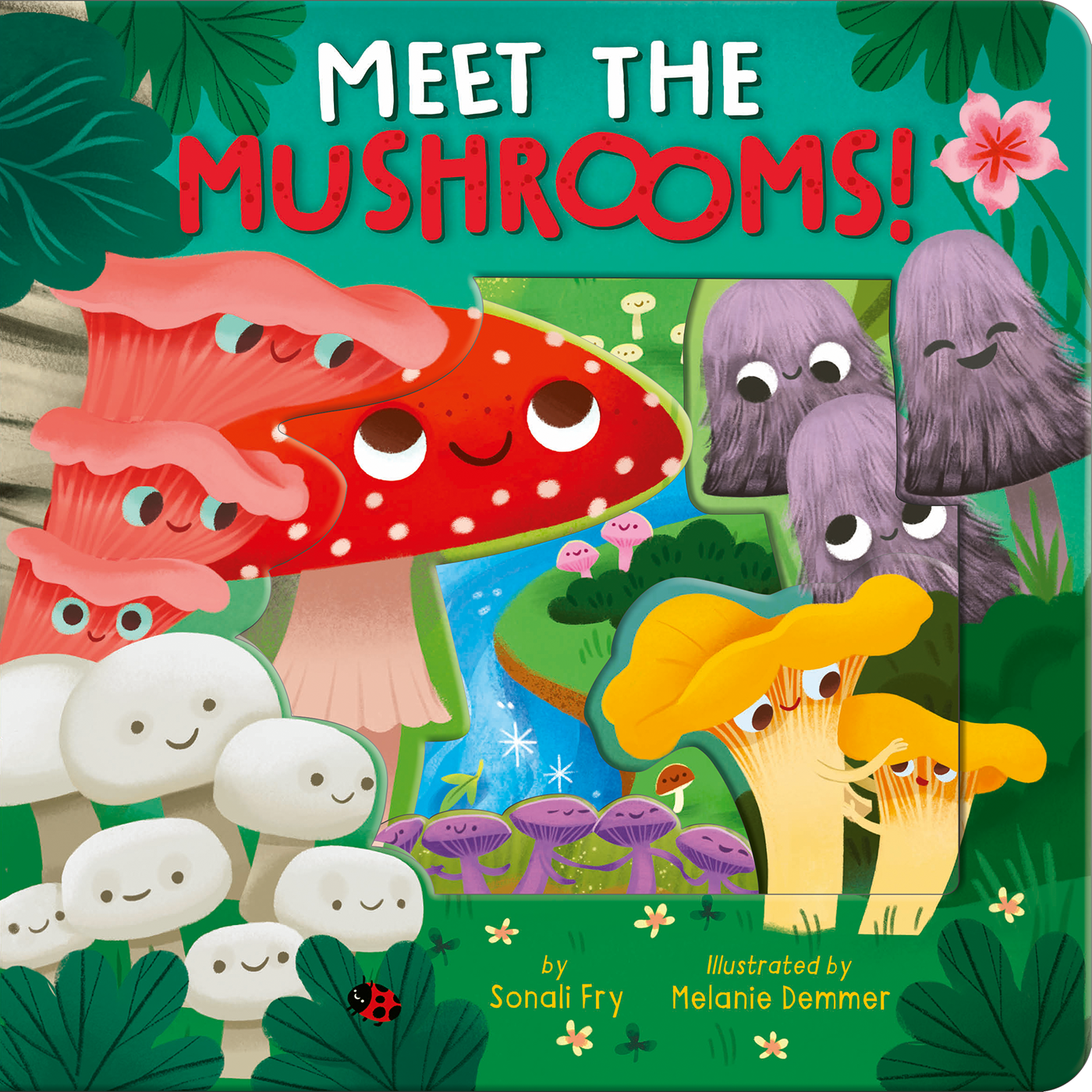
This sturdy board book features interactively layered die-cut cardboard pages so the very youngest of mycologists can explore the various colors, shapes and sizes of all kinds of little mushroom guys. 😊 Continue reading “Meet the Mushrooms 🍄🍄”
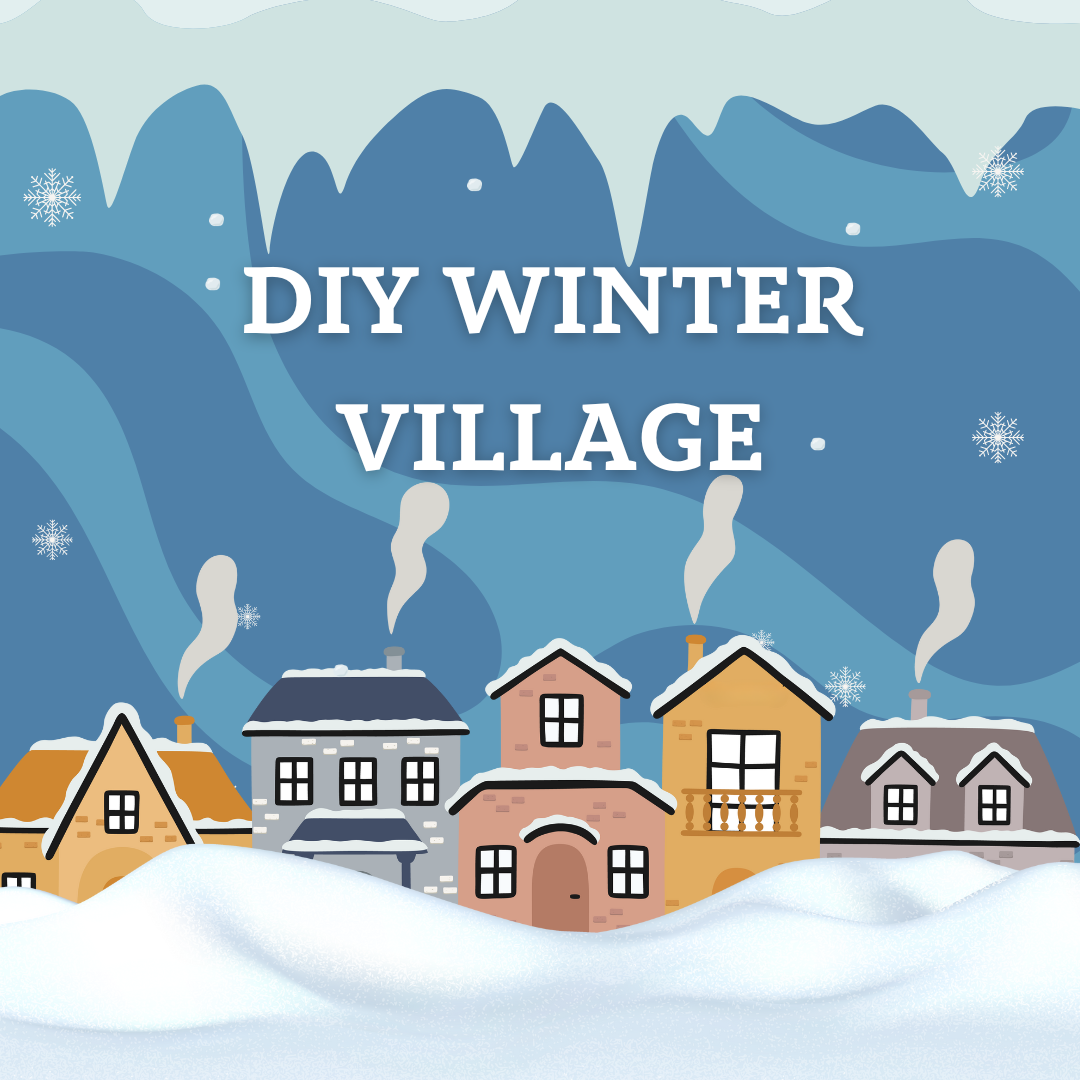
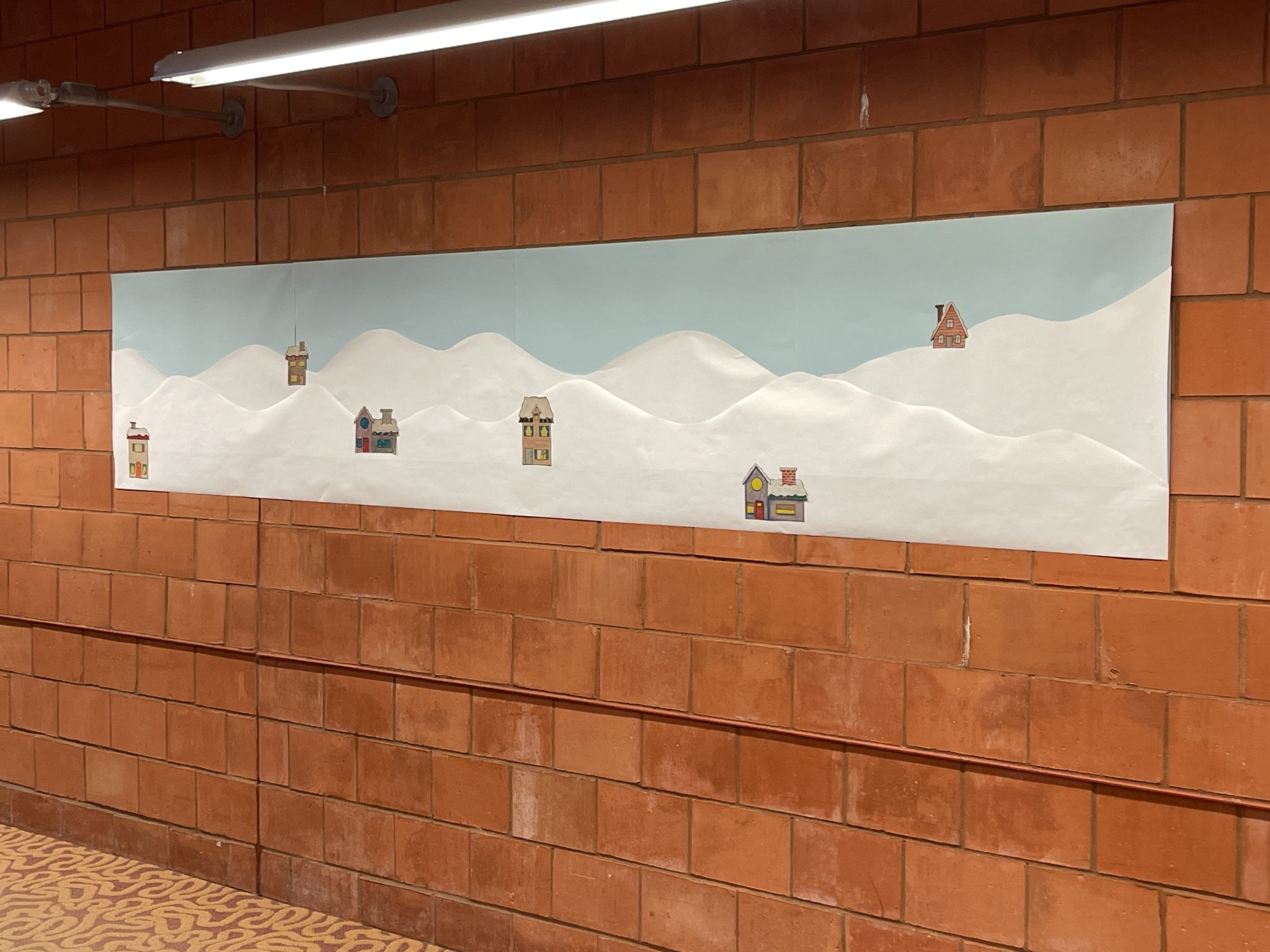
As I write this blog (on February 8) the weather is bright and sunny. The temperature is currently 67°F which is 32 degrees above average. If this continues by the time you read this, it might feel like summer, and I might feel a little sheepish writing a blog about creating your own winter village. But it is still technically *checks notes* WINTER! I even looked up the daily average for Columbia, MO and we usually see temperatures closer to 45°, and once way back in 1903, it was -6°F. So we’re gonna party like it’s 1903 and make our own indoor winter village!
Using tape or glue, adhere your house to your large piece of paper.
Hang it up and enjoy!
Note: If you come to the Columbia Public Library before the end of February, we’ll have supplies for you to help us make our winter village. Color a house during your visit and leave it with us, and we’ll add it to our community mural. You can visit the mural on the first floor near the Children’s Desk.
Ancient Greeks used six different words to describe the diverse feelings of love people have for one another. After all, there’s a difference between how you love your best friend and how you love your family and a difference between the love one has for the human species and the love one has for a partner.
So… what does this have to do with friendship bracelets? Well, Valentine’s Day is nearly here, and while it’s a fantastic time of year to show appreciation and love for one’s romantic partner, it’s also a great time to spread love of all kinds! In this post, I will lay out a “friendship bracelet boot camp.” My idea with this is that, if you are approaching this blog post as a complete beginner, you will be able to smoothly progress from bracelet patterns 1 through 4 if you so choose! That being said, if you only like one or two patterns, just do those. The most important thing about creating art is that you, the artist, enjoy the process and the result.
If you’ve been making friendship bracelets for a while, I hope you enjoy my explanation of the craft and hopefully even find a cool pattern you like! I’m no professional, but I don’t think you need to be to enjoy the craft of creating unique patterns and wearable art. It’s so much fun to be able to say “Thanks, I made it myself.” I hope this inspires others to feel the same! Continue reading “Friendship Bracelets…or Bookmarks!”
I’m back and I’m excited to share with you all some of the new books coming out this month! As always, if you prefer reading or listening digitally, check the catalog after the book’s publication date to see if we have the eBook or e-audiobook.
Alright, I know that it’s not actually spring yet. But we can still prepare for it! Daniel is visiting the park with his grandfather, and Grandpa asks him what’s new. As adults, we’re used to casually using phrases like this, but Daniel takes the question very literally and ventures out into the park to seek an answer. Daniel finds new baby ducklings, a snake with new skin, and tadpoles with new legs as well as many other springtime discoveries. As he reports back to Grandpa, he adds his own new developments, like the ability to whistle and a new tooth. The vibrant acrylic and collage illustrations joyfully herald spring and will likely inspire other young nature lovers — it’s the perfect book to enjoy as we’re finishing out winter. Continue reading “Brianna’s Books: February Favorites 2024”
Do you ever start a project assuming it will go one way, only for it to end up turning around, doing a cartwheel and laughing at your assumptions? This project did that to me. Originally, I questioned whether or not we would be able to see a difference between the childhood books that were influential to different generations. I ended up wondering about universal themes instead.
Before working at the library, I was never really a part of any multigenerational workplaces. When working in a preschool, it was really just people relatively close to my age. When nannying, it was just me. Now I regularly work with people of all ages, from late teens to early 70s and everything in between. Because of this, I have become fascinated with the little generational differences that pop up, from how we talk to each other to our reactions to external events. Knowing that, working in a library, most of us have pretty deep connections to books, I began to wonder whether some of the generational difference I saw came from the books we consumed in our youths. With this in mind, I staged informal interviews with 20 of my coworkers, hoping to uncover trends in the responses across the different ages.