
While bigger and faster are often equated to better, let’s slow down and take a moment to consider something tiny that is, nevertheless, mighty. There is a proverb that says, “If you think you’re too small to make a difference, you have never spent the night with a mosquito.” Mosquitoes have the power to keep a person indoors for the bulk of the summer, just to avoid being covered in itchy bites. Worse yet is the fate of the millions of people who contract malaria from mosquito bites every year. Malaria parasites are invisible to the naked eye but can be deadly. Tiny but mighty, to be sure.
Microbes like malaria parasites are defined as organisms that are too small to be seen without using a microscope. Not all microbes are bad, though. Consider the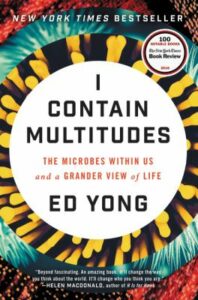 book “I Contain Multitudes” by Ed Yong. The author explains how humans, as with many other species, are not in some ways single organisms but actually homes for entire microbiomes of microorganisms. Many of our microbes work in symbiosis with their environments to “sculpt our organs, defend us from disease, break down our food, educate our immune systems, guide our behavior” and more. Yong even details ways that scientists are manipulating relationships between organisms and the microorganisms they host in beneficial ways.
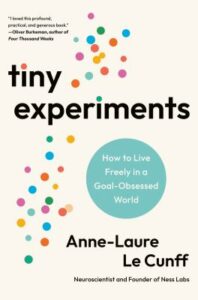 In her book, “Tiny Experiments: How to Live Freely in a Goal-Obsessed World,” neuroscientist and entrepreneur Anne-Laure Le Cunff suggests small shifts in thinking to help people “break free from the invisible cognitive scripts that shape your life” as well as explaining the benefits of imperfection and seeing a way forward when faced with uncertainty. Thinking of obstacles in life as experiments and opportunities is a simple change that can help open up possibilities where one might have previously been stuck. Tiny changes in one’s thought processes can yield big results, reigniting curiosity and joy in one’s life.
The inspiration for this installment of Literary Links is “Tiny But Mighty: Kitten Lady’s Guide to Saving the Most Vulnerable Felines”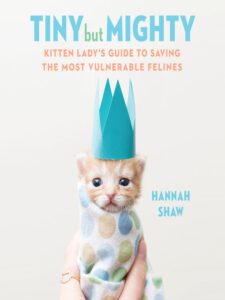 by Hannah Shaw. Otherwise known as “Kitten Lady,” Shaw has dedicated her life to rescuing animals, especially very young
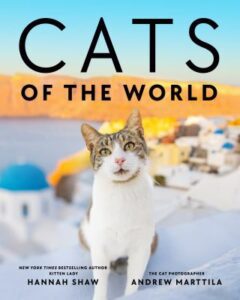 kittens. Along with her husband, photographer Andrew Marttila, she has traveled the world teaching kitten rescue and pet population control at animal shelters. She shares her knowledge on topics like kitten-specific health challenges, feeding unweaned kittens, finding good homes for kittens and staying motivated despite seemingly overwhelming challenges. Her books are full of beautiful photos, too. For a behind-the-scenes look at Shaw and Mattila’s rescue/travel adventures, you might also enjoy their book, “Cats of the World.” Kitten Lady can’t save all of the kittens she encounters but she certainly tries and often her tiniest charges prove themselves to be mighty fighters.
 “Tiny + Wild: Build a Small-Scale Meadow Anywhere” by Graham Laird Gardner is a guide for anyone who has a small patch of outdoor property and a love of nature. Proving that it only takes a small area of native plants to create beauty, as well as shelter
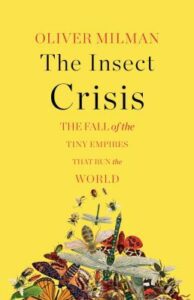 and food for pollinators and other wildlife, Gardner takes readers through the whole process, from concept to completion. With enough natural, pesticide-free pollinator spaces in an area, important pathways are created to preserve our native insects. Even small patches of land can serve as connections that support biodiversity and mitigate climate change. On a related note, check out “The Insect Crisis: The Fall of the Tiny Empires That Run the World” by Oliver Milman for an in-depth look at why protecting insect life is vital to life on the planet.
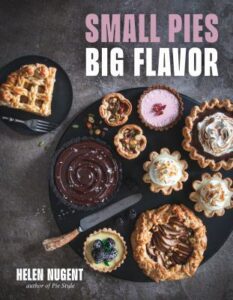 “With recipes for 40 sweet and savory treats, and four versatile pie doughs, you’ll master the foundations of small pie baking and whip up irresistible creations.” You read that right; the last book on this list is full of little pies (and tarts and galettes…)! “Small Pies: Big Flavor” by Helen Nugent is a guide to making small desserts that pack a mighty flavor punch. Grab this book if you have a small refrigerator, a small gathering or if you just don’t have room for leftovers. You can enjoy a tiny pie in the moment but it won’t haunt you for days afterwards.
The world of tiny but mighty things is diverse and the library has it covered. Pick up a little reading today!