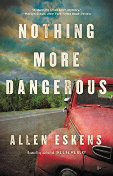
Set in 1976 in the fictional Missouri towns of Jessup and Dry Creek somewhere south of Jefferson City, “Nothing More Dangerous” is a coming of age novel of race, crime and the meaning of family. The writing is excellent, and the story, as told through the eyes of the fifteen year-old narrator, is compelling and often poignant. It’s a gritty crime tale told against a backdrop of cultural issues that remain relevant today. Added bonus: the author is a former criminal defense attorney who grew up in Jefferson City, and locals will appreciate the Central Missouri setting and references to Columbia.
Three words that describe this book: moving, engrossing, perceptive
You might want to pick this book up if: You enjoy coming of age novels, crime novels, novels that address racism, or novels set in Central Missouri. If you check any of these boxes, you will appreciate “Nothing More Dangerous.”
-Jeff
Hopefully you’re cruising right along with the Read Harder Challenge, but if you’re not don’t worry. There’s still time to join us in this year’s challenge!
Task #6 is for a historical fiction novel not set in WWII. It seems like almost every historical fiction book is about World War II. It’s not your imagination — there really are a lot. But there are also a lot of historical fiction books covering EVERY OTHER TIME FRAME IN HISTORY. Continue reading “Read Harder 2020: Historical Fiction NOT Set in WWII”
Below I will be sharing some of the new nonfiction titles that will be released in August. All the titles are available to put on hold from our catalog and will also be made available on the library’s Overdrive account on the day of publication. For a more extensive list of new nonfiction books coming out this month check our online catalog. Continue reading “Nonfiction Roundup: August 2020”
Imagine being born into a world whose habitable lifespan your parents and grandparents have allowed to be dramatically curtailed so that a few people could make more money than they otherwise would. Now imagine your parents have forced you to spend your summer vacation in a large house shared with your parents’ friends from college and their respective kids. Now you are in the headspace of Evie, the sardonically hilarious teenage narrator of “A Children’s Bible” by Lydia Millet, a novel I recommend with delirious arm-flailing gusto. Continue reading “The Gentleman Recommends: Lydia Millet”
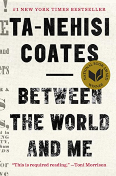
“Between the World and Me” is written by the author as a letter to his teenage son. It describes his life growing up and living as a Black man in America. He speaks frankly and bluntly about the way systemic racism has shaped his behaviors and self-perception in today’s world. This was a great book and I really liked it. It gave me a small taste of what it is like to live in America as a Black man, something I can never experience. It also was a personal call to action against the deeply ingrained policies and systems put in place in our country.
Three words that describe this book: Powerful, Moving, Vivid
You might want to pick this book up if: you are seeking to understand the world from another perspective and to learn more about the systemic racism in our country.
-Rachel
After a stressful trip to the grocery store, which has become a maze of confusing one-way aisles, what do you do to unwind? You’ve sprayed down all your groceries with disinfectant, taken your shower and put on your sweats. Time to fire up the old streaming service, am I right? Now comes the question: do you binge or do you comfort watch? Binge watching relies upon that human impulse to learn what happens next — you’re following story arcs, investing in characters and on the edge of your seat.
When you comfort-view, the pressure is off — you know what to expect already. Comfort watching immerses you in nostalgia for a time in your life, or in the familiar tropes of a beloved genre. Me, I like some good old-fashioned comfort T.V. Lately, the genre I’ve been craving is goofy old B-grade movies. The kind of campy sci-fi that makes me laugh at the loosely constructed plots, the terrible special effects and the sheer lunacy behind the premise of the script. I find it comforting that grown adults spent good money producing these preposterous films. Continue reading “Getting Campy on Kanopy”
In the midst of a pandemic, feeling connected is so important now more than ever. That is especially true for people who are acting as caregivers to friends, family, or loved ones. The role of caregiver can often be stressful, challenging, and exhausting, both mentally and physically. Since the library is unable offer our regular group meeting spaces, the Alzheimer’s Association is providing a number of free virtual education programs for the month of July and beyond. Continue reading “Virtual Education with the Alzheimer’s Association”
Until I worked in a library, I thought Summer Reading was just a fun way to get kiddos to come to the library and read some good books over the summer. It brought back memories of staying up late reading “The Saddle Club” under the covers with a flashlight long past my bedtime. While Summer Reading is definitely fun, I had no idea how vital it is to the community.
Summer Reading is a fixture at public libraries (and has been since the late 19th century) for good reason: it helps combat the “summer slide.” The summer slide is a term for the tendency children have to lose reading and math levels over the summer because they are not in a classroom every day. The steepness of this slide also varies based on socioeconomic status, with children from lower income families being disproportionately affected. I cannot do justice to the research and statistics surrounding this issue, but this article from Reading Rocket does a great job explaining in more detail and offering further resources. Summer Reading exists to mitigate this loss by getting kids reading. Continue reading “Summer Reading – Not Just For Kids!”
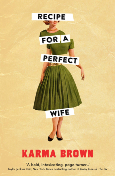
“Recipe for A Perfect Wife” is about a modern-day newlywed who finds herself in a new house that is actually old and has some stories she ends up unearthing and digging into. It’s two stories in one, from the past residents of the home, to the present, and woven together very nicely. Here is my review: I absolutely loved this creation! Absolute pure, dark genius! I mean it! Really, really fabulous. I think that’s what I said aloud, at least, as I closed the book after reading the final acknowledgements. I loved the recipes, and the quotes at the beginning of the chapters. The story of the past and the story of now and how they coexisted was spectacularly formed and woven, and it was funny, dreadfully awful, and inspiring all at the same time. How do you DO that? Why don’t more authors DO THAT?! I loved reading the little author’s recipe in the back, and seeing some of the other author names listed made me happy because I have their their books too. This book drew me in from the very beginning, never lost me for an instant, never disappointed me in any way, and was better than I had expected. I had read some snippet about this book from BookBub and put it on my Goodreads “to read” list and waited through the holiday, then the coronavirus (and we’re still kind of there, but at least now finally the library has curbside open and I could finally get this book), and it was worth the wait. I will read it again, or own it even. Loved it! It’s going to sit with me for a while, and I’m so glad.
Three words that describe this book: entertaining, haunting, beautiful
You might want to pick this book up if: You liked “Julie and Julia,” or if you want a blast from the past.
-Anonymous



 “”
“” “”
“” “”
“”
 Hopefully you’re cruising right along with the