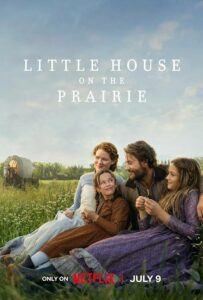
 I recently binged season one of Netflix’s “Little House on the Prairie,” based on the children’s books by Laura Ingalls Wilder. Naturally, people have reacted immediately to this project. They’ve compared and contrasted it to the 1930s and 40s original books, as well as to the 1970s and 80s nine-season NBC series. For example, in January 2025 Megyn Kelly warned Netflix on social media, “[I]f you wokeify Little House on the Prairie I will make it my singular mission to absolutely ruin your project.” And as of this writing, Rotten Tomatoes reflects a 79% rating. Many differences are obvious and superficial. In the new series actor Luke Bracey sports a beard like Pa does in the books; on the NBC show Michael Landon stays clean-shaven. Mary and Laura are older children in the new series at 12 and 10; in the books they start out at six and four.
On a deeper level, the biggest dissimilarity is the new series’ focus on the indigenous inhabitants of Osage Territory and their land dispute with white settlers. Here Ma cultivates a friendship with an Osage woman and teaches her daughter. By contrast, in the books Ma fears and despises Native Americans. As a child, I treasured the books and the NBC show. But I’m excited by the Netflix series’ exploration of the Ingalls family’s interactions with indigenous people that push the characters to evolve past prejudice.
Experiencing a new version of the Ingalls family can prompt us to consider the most fresh releases in Native children’s literature. Here’s a sampling of Indigenous Reads Rising’s recommendations from their extensive 2026 list.
- The Animals Speak: The Lakota Way by SD Nelson (Standing Rock Sioux Tribe). The author shows what wisdom can be learned from animals.
- A Good Hide by Karina Iceberg (Aleut-Alutiiq). The author shares a message of shared knowledge as an Alaskan community tans a moose hide.
- Napesni Renegade: A Bison’s Journey by Marcie R. Rendon (White Earth Nation). The author tells a tale based on a true story about a wild bison.
 Chapter Books
- The Froggy Library by Julie Fiveash (Diné). This graphic novel adventure draws inspiration from the author’s background as a Diné librarian.
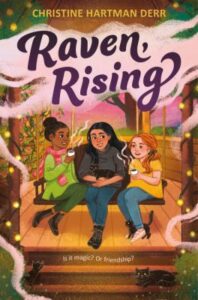
- Raven, Rising by Christine Hartman Derr (Cherokee Nation). This novel follows a Cherokee girl who, after the loss of her parents, acclimates to difficult social dynamics in her new school with a curious magic.
- Red River Rose by Carole Lindstrom (Anishinaabe/Metis). This historical novel offers readers a portrayal of a young Métis girl who takes a stand to protect her way of life.
- An Expanse of Blue by Kauakanilehua Mahoe Adams (Kanaka Maoli). A novel-in-verse about a Native Hawaiian girl’s fight to find belonging in a fracturing family.
- Medicine Wheels by Byron Graves (Red Lake Ojibwe and Lakota). A story of a young Ojibwe athlete learning to ride in his father’s footsteps while practicing for a skateboarding championship.
- Shards of Silence by Brian Lee Young (Diné). The author bridges the generational divide between a Navajo teen at an elite prep school and his great-grandmother’s experience at a federal boarding school.
I invite you to watch the updated version of the Ingalls family’s lives and to read current indigenous children’s literature. In doing so, we can gain a broader understanding of our country’s complicated history and its effect on the present, all told through stories.